

Regular sauna use can cut your risk of sudden cardiac death by 63% with frequent use, yet most people still think of sauna as a luxury rather than a health tool. That gap between perception and evidence is exactly what holds so many people back from one of the most accessible preventative care strategies available. Whether you are an athlete in Las Vegas managing recovery, a busy professional carrying chronic stress, or someone simply focused on living longer and feeling better, sauna therapy offers science-backed benefits that go far beyond relaxation. This guide covers everything you need to know about how sauna protects your health, how to use it effectively, and what precautions to keep in mind.
Table of Contents
- Why sauna is a powerhouse for preventative care
- The science behind sauna's preventative benefits
- Sauna protocols for maximum preventative care
- Limitations and safety: who should (and shouldn't) use sauna for prevention
- Real-world impacts: stress relief, cognitive benefits, and athlete recovery
- A fresh perspective on sauna for preventative care
- Where to experience evidence-based sauna therapy in Las Vegas
- Frequently asked questions
Key Takeaways
| Point | Details |
|---|---|
| Lower disease risk | Regular sauna use significantly reduces the risk of heart disease and hypertension. |
| Powerful stress relief | Saunas help lower cortisol and improve mood, sleep, and mental clarity. |
| Optimized recovery | Post-workout sauna sessions accelerate muscle repair and reduce soreness for athletes. |
| Accessible prevention | Infrared saunas offer similar benefits to traditional saunas but at lower temperatures, suiting more users. |
| Smart usage matters | Hydration, session frequency, and safety precautions optimize sauna’s preventative effects. |
Why sauna is a powerhouse for preventative care
Most people associate sauna with spa days and sore muscle relief. The reality is far more significant. Sauna bathing creates a cardiovascular response in your body that closely mirrors moderate aerobic exercise. Your heart rate climbs, blood vessels dilate, circulation improves, and your body works hard to regulate temperature. Over time, this consistent stress leads to lasting adaptations that protect your heart, blood pressure, and stress response systems.
The evidence for this is not anecdotal. Research shows that sauna bathing reduces hypertension risk by 47% in individuals using sauna 4 to 7 times per week, independent of BMI, smoking habits, and baseline blood pressure. A separate analysis confirms diastolic blood pressure reductions even in individuals with normal starting blood pressure, suggesting sauna could serve as a primary prevention tool before hypertension ever develops.
"Frequent sauna use (4 to 7 times per week) is associated with a 63% lower risk of sudden cardiac death and a 50% lower risk of fatal cardiovascular disease." Medical Science, Discovery Journals (2025)
Here is a quick look at the conditions sauna helps prevent or manage:
- Hypertension (high blood pressure)
- Cardiovascular disease and sudden cardiac death
- Chronic stress disorders and anxiety
- Metabolic syndrome related inflammation
- Cognitive decline and dementia
- Depression and mood disorders
For Las Vegas residents juggling demanding schedules, high temperatures, and fast-paced lifestyles, these benefits are not abstract. They are relevant every single week. To dig deeper into the current body of sauna therapy research, the evidence is both consistent and growing.

The science behind sauna's preventative benefits
Understanding why sauna works helps you use it more intentionally. When your body is exposed to heat, a cascade of physiological responses begins almost immediately. The core mechanisms that drive sauna's preventative effects include the following:
| Mechanism | Sauna effect | Comparable to aerobic exercise |
|---|---|---|
| Heat shock proteins (HSPs) | Activated to repair damaged cells | Triggered by physical exertion |
| Nitric oxide production | Increases blood vessel flexibility | Enhanced by sustained cardio |
| Arterial stiffness | Reduced after repeated sessions | Improved by regular running |
| Heart rate | Elevated to 100 to 150 bpm | Similar to brisk walking |
| Systemic inflammation | Suppressed with regular use | Lowered by consistent training |
| Autonomic regulation | Improved parasympathetic balance | Supported by aerobic fitness |
According to research published in Frontiers in Cardiovascular Medicine, key sauna mechanisms include the upregulation of heat shock proteins, enhanced endothelial function through increased nitric oxide bioavailability, reduced arterial stiffness, and suppression of systemic inflammation. These are not minor effects. These are the same pathways targeted by blood pressure medications and cardiac rehabilitation programs.
There is also a clear dose-response relationship with sauna use. One session per week offers some benefit, but the most dramatic results come from four to seven sessions weekly. Your body treats sauna heat as a hormetic stressor, meaning a controlled, manageable stress that prompts your system to grow stronger in response.
This is particularly relevant for professionals who sit at a desk for eight or more hours a day. If your schedule makes it difficult to commit to daily gym sessions, sauna offers a legitimate cardiovascular alternative that fits into a shorter window of time. Reviewed within our complete sauna health guide, the overlap between sauna effects and exercise adaptations is striking.
Pro Tip: If you do have time to work out, adding a sauna session immediately after training creates a powerful one-two combination. Your body is already primed for adaptation, and sauna amplifies the cardiovascular and muscular responses that follow exercise.
Sauna protocols for maximum preventative care
Knowing sauna is beneficial is one thing. Knowing how to structure your sessions is what translates that knowledge into real results. Here is a practical framework for building sauna into your preventative care routine.
| Variable | Beginner | Intermediate | Athlete/Advanced |
|---|---|---|---|
| Sessions per week | 2 to 3 | 4 to 5 | 5 to 7 |
| Duration per session | 10 to 15 min | 15 to 25 min | 20 to 45 min |
| Traditional sauna temp | 150 to 175°F | 175 to 190°F | 185 to 195°F |
| Infrared sauna temp | 120 to 130°F | 130 to 140°F | 140 to 150°F |
| Hydration | 16 oz water before | 16 to 24 oz before | 24 oz before and after |
| Cool-down | 5 to 10 min rest | Cold plunge or cool shower | Active cold contrast |
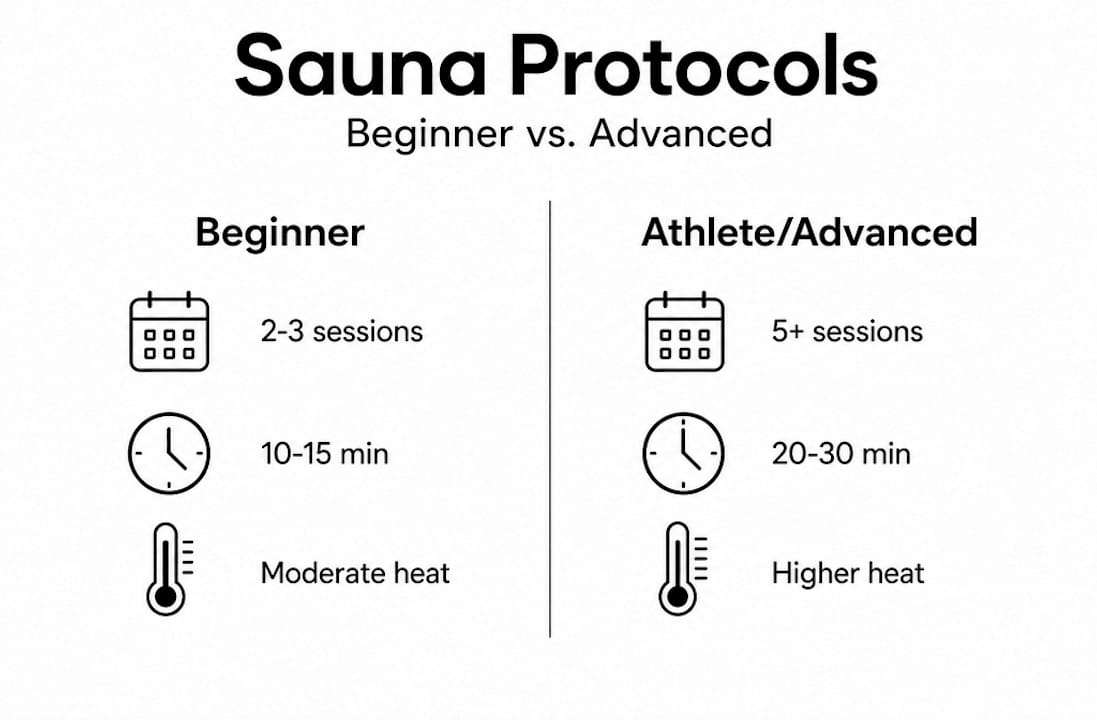
Research supports protocols of 4 to 7 sessions per week, ranging from 10 to 45 minutes per session, with traditional sauna temperatures between 150°F and 195°F, or infrared between 120°F and 150°F. But you do not need to start at the advanced end of that range.
Here is a step-by-step guide to getting started safely and effectively:
- Start with 2 to 3 sessions per week at 10 to 15 minutes each to let your body adapt to the heat.
- Drink at least 16 ounces of water before entering and have water available during longer sessions.
- Choose your temperature based on experience level. Infrared sauna at lower temps is ideal for beginners.
- Set a timer so you stay within safe session lengths, especially during your first few weeks.
- Exit and cool down properly after each session. Sit quietly, take a cool shower, or use a cold plunge.
- Increase frequency gradually over four to six weeks until you reach your target session count.
- Track how you feel after sessions. Energy, sleep quality, and mood are reliable indicators of progress.
- Add post-workout sessions once your baseline is established if you are training regularly.
For those managing more demanding training loads, exploring athlete sauna protocols gives a more detailed breakdown of how to structure heat exposure around training cycles.
Pro Tip: Post-workout sauna sessions are especially powerful for muscle recovery. Heat exposure after training activates growth hormone release and accelerates tissue repair, giving you a meaningful edge in how quickly you bounce back between sessions. Learn more about these athlete recovery benefits to see how this fits your training plan.
Limitations and safety: who should (and shouldn't) use sauna for prevention
Sauna is safe for most healthy adults, but there are important conditions where caution or avoidance is warranted. Being informed about these situations protects you and ensures you get the most from your sessions.
The following individuals should avoid sauna or consult a physician before starting:
- People who have had a recent heart attack or cardiac event
- Those with unstable angina or uncontrolled arrhythmia
- Individuals with decompensated heart failure
- Pregnant women, particularly during the first trimester
- Anyone with an acute illness or active fever
- People who have consumed alcohol before their session
- Those experiencing severe dehydration
- Individuals wearing transdermal medication patches such as fentanyl, as heat can affect absorption rates
"Sauna should be avoided in cases of unstable angina, recent myocardial infarction, decompensated heart failure, acute illness, fever, or alcohol use. Transdermal patches may have altered drug delivery under heat exposure." Health.com
These sauna contraindications cover the most critical safety concerns. It is also worth noting that evidence in advanced coronary artery disease is still developing. Short-term trials show less vascular benefit in people with advanced cardiac disease compared to healthy individuals, and the possibility of healthy user bias in larger population studies cannot be fully ruled out yet.
The takeaway is straightforward: if you have a diagnosed heart condition, talk to your doctor before starting a regular sauna regimen. For most healthy adults, including those managing mild hypertension or metabolic stress, sauna is a safe and highly effective tool. Reading through common infrared sauna myths is also a useful step before your first session.
Real-world impacts: stress relief, cognitive benefits, and athlete recovery
The numbers matter, but so does what you actually feel. Regular sauna users report meaningful improvements in daily quality of life across mental, physical, and emotional dimensions.
Research shows that frequent sauna use is associated with a 65% lower risk of dementia, improved mood, reduced anxiety and depression symptoms, and better sleep quality. These are not minor side effects of heat exposure. They reflect real changes in how your nervous system and brain chemistry respond to regular thermal stress.
Here is what consistent sauna use supports beyond heart health:
- Lower cortisol levels, the primary stress hormone driving chronic inflammation and burnout
- Improved sleep quality, including faster sleep onset and deeper rest cycles
- Reduced anxiety and depression symptoms through endorphin and serotonin activity
- Enhanced mental clarity and focus during the hours following a session
- Stronger stress resilience over time as your autonomic nervous system becomes better regulated
- A 65% lower risk of dementia with regular, frequent use over years
For athletes, post-workout sauna use reduces delayed onset muscle soreness, activates heat shock proteins for faster muscle repair, expands plasma volume for improved endurance, and supports heat acclimation that translates directly to performance in warm conditions. Las Vegas summer heat becomes a performance variable, and athletes who regularly sauna adapt to it faster.
These benefits align directly with what stress relief with sauna can look like in practice for busy professionals and active individuals in the Las Vegas area. Pairing sauna with other recovery tools like infrared sauna and red light therapy creates an even more complete recovery environment.
A fresh perspective on sauna for preventative care
Here is something most wellness articles will not say directly: for certain people, consistent sauna use might be more practical than daily exercise as a cardiovascular health strategy.
This is not a reason to skip the gym. It is a recognition that many adults in high-demand careers, those with mobility limitations, or individuals recovering from injury face real barriers to sustained exercise routines. Sauna does not replace movement, but it activates many of the same protective pathways. That makes it a legitimate tool in its own right, not just a recovery add-on.
The bigger insight is that consistency beats intensity in preventative care. Someone who uses sauna four times a week for 20 minutes will almost certainly see stronger outcomes than someone who uses it intensely once every two weeks. The science around hormetic stress responses is clear: your body adapts to repeated, manageable challenges. One dramatic session does not build the same foundation that regular, measured exposure does.
We also think it is worth addressing the skepticism head-on. Some people still view sauna as a pseudoscience wellness trend. The research does not support that view. The studies cited here come from peer-reviewed cardiovascular journals, large cohort analyses, and meta-analyses with robust sample sizes. The case for sauna as both preventive and therapeutic is no longer fringe. It belongs alongside nutrition, exercise, and sleep as a pillar of long-term health. If you are questioning what's real and what isn't, exploring sauna detoxification myths will help you separate fact from fiction.
Where to experience evidence-based sauna therapy in Las Vegas
You now have the knowledge. The next step is putting it into practice in an environment designed to support your goals. At Wellness Sauna & Cryotherapy in Las Vegas, we offer infrared sauna options tailored to both preventative care and daily stress relief, alongside specialized sauna sessions for athletes focused on performance and faster recovery. If your primary goal is healing, our recovery and red light sessions combine infrared heat with therapeutic light to accelerate results. Our team can help you build a consistent weekly protocol based on your specific health goals, whether you are just starting out or looking to optimize an existing routine. Book your first session and feel the difference that science-backed sauna therapy makes.
Frequently asked questions
How often should I use a sauna for preventative health effects?
Aim for 4 to 7 sessions per week at 10 to 45 minutes each for optimal preventative benefits, as supported by major cardiac and hypertension studies. Starting with 2 to 3 sessions per week is a safe and effective entry point.
Is an infrared sauna as effective as a traditional sauna for preventative care?
Infrared and traditional saunas both deliver comparable preventative benefits, but infrared operates at lower temperatures and may be more comfortable and accessible for beginners or those sensitive to intense heat.
Can I use a sauna if I have heart disease or high blood pressure?
Sauna may help control blood pressure in healthy individuals, but those with recent heart events or advanced disease should consult their doctor before starting a sauna regimen, as contraindications apply in some cardiac conditions.
What should I do to stay safe and maximize sauna benefits?
Hydrate with at least 16 ounces of water before your session, start with shorter durations, cool down properly afterward, and avoid alcohol before sauna to protect your safety and get the most from each session.
Does sauna use really reduce the risk of dementia?
Yes, frequent sauna use is associated with a 65% lower dementia risk according to recent research, likely through improved circulation, reduced inflammation, and lower chronic stress levels in the brain.
Recommended
- Sauna therapy: 63% lower cardiac risk & recovery benefits
- Sauna health benefits: Complete guide for recovery 2026
- Infrared sauna benefits: Recovery and stress relief for athletes
- Infrared Sauna Las Vegas | Red Light Therapy Benefits
- Sunlighten-cea mai eficienta sauna medicala cu infrarosu din lume - Brainwellness