
If you've ever stepped out of a sauna feeling like you just "flushed your system," you're not alone in that belief. But here's the thing: sweat is not a detox route on par with your liver or kidneys. That doesn't mean sauna therapy has nothing to offer. For fitness enthusiasts and health-focused individuals across Las Vegas, saunas provide real, measurable benefits for recovery and well-being. This guide walks you through what sauna detoxification actually means, what the science says, and how you can safely use heat therapy to support your goals without falling for misleading claims.
Table of Contents
- What does 'detoxification' through sauna really mean?
- How sauna therapy supports your body's natural processes
- Comparing sauna detox claims to clinical detoxification methods
- Safety considerations and how to optimize your sauna experience
- Why most people misunderstand sauna detox and how to get real results
- Experience advanced sauna and wellness options in Las Vegas
- Frequently asked questions
Key Takeaways
| Point | Details |
|---|---|
| Sweat is not major detox | The liver and kidneys do the heavy lifting for detox, while sweat plays a minor role. |
| Saunas boost recovery | Regular sauna use supports relaxation, cardiovascular health, and post-exercise recovery. |
| Combine with healthy habits | Maximize benefits by pairing sauna sessions with hydration, proper rest, and nutrition. |
| Safety comes first | Prevent adverse effects by listening to your body, staying hydrated, and avoiding risky combinations. |
What does 'detoxification' through sauna really mean?
The word "detox" gets thrown around a lot in the wellness world, and nowhere is it more misused than in conversations about saunas. Let's clear this up right away, because understanding the real biology here will help you get far more from your sessions.
Detoxification is the biological process by which your body neutralizes and removes harmful substances, including metabolic waste, environmental pollutants, alcohol byproducts, and other compounds that don't belong in your tissues. Most of this work is done by two organs: your liver and your kidneys. The liver chemically transforms toxic compounds into water-soluble waste. The kidneys filter that waste from the blood and excrete it through urine. This is a continuous, automatic process that runs 24 hours a day whether or not you're sitting in a heated room.
So what role does sweat play? Your skin is the body's largest organ, and sweat glands do secrete trace amounts of certain compounds alongside water, sodium, and electrolytes. However, sweat contains trace pollutants while the liver and kidneys remain the dominant detox organs. In practical terms, the volume of toxin removal through sweat is a very small fraction of what your liver and kidneys handle every hour.
Here's a quick look at how common toxins leave the body:
| Substance | Primary removal route | Secondary route |
|---|---|---|
| Alcohol byproducts | Liver (oxidation) | Lungs, kidneys |
| Heavy metals (lead, mercury) | Kidneys (urine) | Trace via sweat |
| BPA and plasticizers | Liver, kidneys | Minimal via sweat |
| Urea (metabolic waste) | Kidneys | Small amount in sweat |
| Environmental pollutants | Liver, kidneys | Very trace via sweat |
The key takeaway from this table is that sweat is a minor secondary route, not a primary one. When you sweat in a sauna, you are primarily regulating body temperature. The body is doing what it evolved to do: cool itself down by releasing water through the skin.
Why does the myth persist? Part of it is simple psychology. When you sweat heavily, it feels like something is leaving your body. And something is: water. That lighter, cleaner feeling post-sauna is largely the result of fluid loss, elevated heart rate, and the relaxing effects of heat on tight muscles. That's not nothing, but it's quite different from the liver filtering blood at a molecular level.
Many people also confuse the word "detox" with general wellness improvements. Saunas do support wellness, and you can explore the infrared sauna benefits that go beyond the detox myth. Heat stress, improved circulation, and relaxation are all legitimate outcomes from regular sauna use. They just work differently from what most people imagine.
"The body is remarkably capable of detoxifying itself. Sweat may contain trace substances, but calling sauna therapy a detox treatment misrepresents how the body actually processes and eliminates toxins." — Leading biomedical researchers summarizing current evidence
How sauna therapy supports your body's natural processes
After looking at the limits of "detox" claims, let's see how sauna actually fits into a broader wellness routine. Because even if sweat isn't flushing toxins in the way marketing suggests, sauna therapy genuinely supports your body in several meaningful, evidence-backed ways.

Cardiovascular and circulatory benefits are among the most well-documented. When you sit in a sauna, your core body temperature rises, and your heart rate increases to match the demand. Blood vessels dilate. Blood flow to the skin and muscles increases significantly. Over time, regular sauna sessions can improve vascular flexibility, lower resting blood pressure in some individuals, and support heart health. These are real adaptations, not placebo effects.
Sauna therapy supports circulation, heat acclimation, and relaxation, complementing the body's existing elimination systems rather than replacing them. This is the framing that makes sense: sauna as a complement, not a replacement. You're giving your circulatory system a workout without the physical impact of exercise. For athletes and active Las Vegas residents who already push their bodies hard, this kind of passive cardiovascular stimulus can be a smart addition to a recovery plan.
Here are the real, evidence-supported benefits that fitness enthusiasts can expect from consistent sauna use:
- Muscle recovery: Heat increases blood flow to sore muscles, delivering oxygen and nutrients while flushing lactic acid more quickly.
- Reduced muscle soreness: Research shows heat therapy can reduce delayed onset muscle soreness (DOMS) when used post-exercise.
- Improved sleep quality: Core body temperature naturally drops after leaving a sauna, which signals the brain to initiate sleep.
- Stress reduction: Heat exposure promotes the release of endorphins and reduces cortisol levels, leaving you calmer and more mentally clear.
- Heat acclimation: For Las Vegas athletes training outdoors in extreme heat, regular sauna use helps the body adapt more efficiently to high temperatures.
- Improved mood: The relaxation response from heat therapy has measurable effects on mental well-being and anxiety reduction.
Pro Tip: Stack your sauna session with other healthy practices for compounding benefits. Hydrate with electrolyte-rich water before and after your session, schedule it within 30 minutes of finishing your workout, and follow it with cold therapy if you have access to a cold plunge. This contrast approach amplifies the circulatory response and speeds muscle recovery significantly.
It's also worth noting what sauna is not designed to do. Sauna is best used to support normal processes for improved recovery, not as a stand-alone "detox" intervention. If you're dealing with substance abuse, heavy metal poisoning, or chronic toxic exposure, a sauna session will not address those issues. Medical detoxification is an entirely different process, which leads us to the next section.
You can read more about the broader wellness benefits of sauna and how our programs are designed to complement active lifestyles, or check out our sauna therapy insights on the blog for detailed recovery guidance.
Comparing sauna detox claims to clinical detoxification methods
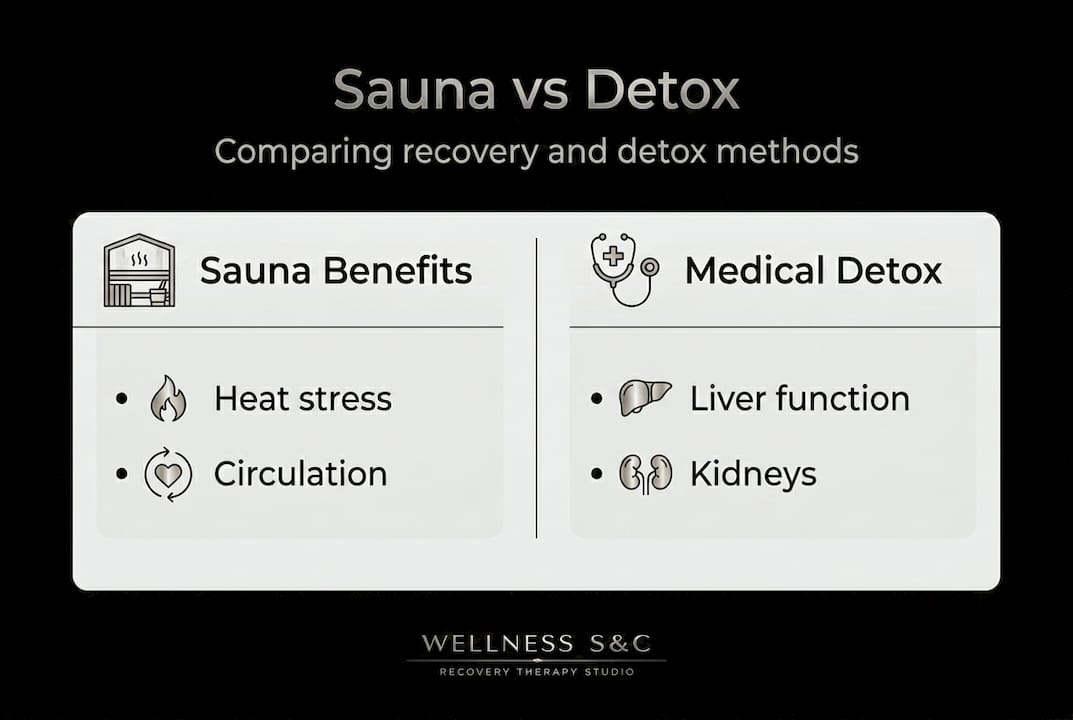
With the role of supportive therapy established, a comparison to clinical detoxification can clarify what to expect and what not to. This side-by-side look gives you a realistic picture of what sauna can and can't do.
| Feature | Sauna therapy | Clinical medical detox |
|---|---|---|
| Mechanism | Heat stress, sweating, circulation | Liver/kidney support, medication, dialysis |
| Speed | Gradual, session-based | Can be rapid with medical intervention |
| What's removed | Trace compounds, excess water | Drug metabolites, toxins, heavy metals |
| Safety | Generally safe for healthy adults | Requires medical supervision |
| Best use case | Recovery, relaxation, circulation | Acute poisoning, drug/alcohol withdrawal |
| Evidence base | Moderate for wellness outcomes | Strong for acute toxin elimination |
The differences here are significant. Clinical detox works at a biochemical level, often with medications or procedures that directly accelerate the liver and kidneys' ability to process harmful substances. Medical professionals use activated charcoal, chelation therapy for heavy metals, dialysis for kidney failure, and pharmaceutical protocols to manage drug or alcohol withdrawal. These are powerful, targeted interventions.
Here's how to think about your options clearly:
- For everyday wellness and recovery, sauna therapy is an excellent, safe option for fitness enthusiasts with no underlying health conditions.
- For general pollutant reduction over time, combining sauna with proper hydration, clean eating, and regular exercise supports your body's natural systems comprehensively.
- For acute toxic exposure, always seek immediate medical attention. A sauna will not adequately address emergency situations.
- For chronic conditions or medication interactions, consult a physician before adding regular sauna sessions to your routine.
- For performance optimization, sauna paired with contrast therapy offers measurable recovery advantages that are well-supported by sports science.
Sauna use for recovery and adaptation has genuine evidence behind it, but true clinical detoxification relies on liver and kidney function. This is not a knock against sauna therapy; it simply clarifies the appropriate expectations. Additionally, evidence for sauna as an active detox protocol is mixed and does not replace medical advice, particularly for high-risk populations.
The smart approach for most Las Vegas wellness seekers is to treat sauna as a powerful wellness tool, not a medical treatment. Used correctly, it complements everything else you're doing for your health.
Safety considerations and how to optimize your sauna experience
Since effective use depends on safety and smart habits, be sure to optimize your sauna routine before stepping in. Heat therapy is broadly safe for healthy adults, but specific risks exist, and knowing them protects you.
Main safety precautions to keep in mind:
- Stay hydrated: Drink 16 to 20 ounces of water before your session and rehydrate immediately after. Dehydration is the most common problem with sauna use.
- Limit session length: For beginners, 10 to 15 minutes is enough. Experienced users can extend to 20 to 25 minutes. Longer is not always better.
- Avoid alcohol: Combining alcohol and sauna raises your risk of dangerous dehydration, low blood pressure, and fainting. This combination accounts for a significant portion of sauna-related incidents.
- Exit if you feel unwell: Dizziness, nausea, or chest discomfort are signals to exit immediately and cool down.
- Monitor temperature: Infrared saunas typically run between 120°F and 150°F. Traditional steam saunas can reach 180°F or higher. Know the temperature you're entering.
Sauna increases risks like dizziness and should be approached with caution, especially with heart conditions or in combination with alcohol or illness. This is not meant to discourage you. It's meant to ensure your sessions are both safe and productive.
"Heat therapy is a powerful wellness modality when used correctly. The risks are manageable with proper hydration, session timing, and awareness of individual health conditions. The key is informed, consistent use." — Health and performance recovery experts
Pro Tip: To maximize both safety and results, avoid eating a large meal within 90 minutes of your session. A lighter body is a more comfortable body in the heat. Also, bring a clean towel to sit on and wear minimal, breathable clothing. Your body regulates temperature more efficiently with less fabric interfering.
Special cases to discuss with your doctor before starting:
- Heart disease or a history of cardiac events
- High blood pressure that is not well-controlled
- Current use of blood pressure medications, diuretics, or sedatives
- Pregnancy
- Recent surgery or open wounds
- Active illness or fever
What to bring and avoid:
Before your session: water, a light snack if needed, comfortable clothing. After your session: a full electrolyte drink, time to cool down gradually, and a clean change of clothes.
Avoid: tight or synthetic clothing, energy drinks that contain stimulants, and any substances that affect heart rate. You can always check our infrared sauna safety tips for a complete pre-session checklist tailored to our facility.
Why most people misunderstand sauna detox and how to get real results
Here's the perspective most wellness guides skip: the sauna detox myth is not just scientifically inaccurate. It's actually limiting your results. When you believe sweating equals detoxing, you use the sauna as a passive shortcut instead of integrating it into a disciplined recovery system. That mindset leads to inconsistent use, poor hydration habits, and disappointment.
The fitness enthusiasts in Las Vegas who get the most from their sauna sessions are not the ones chasing a sweat-based cleanse. They're the ones who show up 3 times a week, hydrate deliberately, combine heat with cold therapy, and treat it as one layer of a broader wellness practice that also includes quality sleep, whole foods, and consistent training.
Heat stress itself is the real mechanism. It triggers adaptations in your cardiovascular system, nervous system, and muscles. Those adaptations build up over weeks and months, not during a single session. Lasting results come from consistency and the full picture of your lifestyle, not from any single therapy acting as a magic reset button. Sauna is a powerful tool. Use it like one.
Experience advanced sauna and wellness options in Las Vegas
If you're ready to apply what you've learned and experience the benefits for yourself, Wellness Sauna & Cryotherapy in Las Vegas is the place to start. Our private, premium facility offers infrared sauna sessions designed for serious recovery, with precise temperature control and a clean, comfortable environment. For those who want to take recovery further, our contrast therapy combines sauna heat with cold plunge for maximum circulatory and muscle recovery benefits. Explore our wellness packages to find the right combination of therapies for your goals. Book your session today and start building the recovery routine your body deserves.

Frequently asked questions
Can saunas really help remove heavy metals from your body?
While sweat contains trace substances, urine is the primary excretion route for heavy metals, meaning sauna contributes minimally compared to normal kidney function.
Is sauna use safe for people with high blood pressure?
Sauna can increase cardiovascular risks in certain conditions, so anyone with high blood pressure should consult their doctor before beginning a regular heat therapy regimen.
How often should I use a sauna for recovery and wellness?
Most experts recommend 2 to 4 sessions per week for recovery benefits, though evidence for optimal post-exercise sauna use suggests the right frequency depends on your individual health and training load.
What should I do to stay safe while using a sauna?
Stay well hydrated, avoid alcohol before and after your session, and exit immediately if you feel lightheaded, with adequate hydration and avoiding alcohol being the most consistently emphasized safety practices in research.