
Walk into any Las Vegas wellness center and you'll hear bold claims about infrared saunas: they "flush toxins through sweat," "penetrate deep into muscles," and deliver transformation in just a few sessions. Some of these claims are exaggerated, and a few are flat-out wrong. But that doesn't mean infrared saunas are without real, proven benefits. What you deserve is a clear, honest breakdown based on actual science, so you can walk into your next session knowing exactly what to expect and how to get the most out of it.
Table of Contents
- How infrared saunas really work: The science vs the myths
- The truth about detoxification and sweating
- What infrared saunas can actually do: Health and recovery benefits
- Infrared vs traditional saunas: Choosing what's right for you
- A reality check: Why evidence beats the hype for Las Vegas wellness
- Experience proven benefits with Wellness Las Vegas
- Frequently asked questions
Key Takeaways
| Point | Details |
|---|---|
| Myths debunked | Sweat detox and deep muscle penetration are inaccurate; real benefits are more modest and surface-level. |
| Evidence-backed effects | Infrared saunas reduce soreness, lower blood pressure, and aid recovery for athletes and wellness users. |
| Sauna types matter | Infrared and traditional saunas both help wellness, but IR is better for heat-sensitive and Las Vegas climates. |
| Best usage practices | Limit sessions to 15-20 minutes, hydrate, and avoid use if you have specific health conditions. |
How infrared saunas really work: The science vs the myths
To understand the roots of infrared sauna myths, let's break down what actually happens to your body during a session.
Infrared saunas use infrared light to heat your body directly, rather than warming the air around you like a traditional Finnish-style sauna. This is a meaningful mechanical difference. Traditional saunas operate between 160 and 200°F, while infrared units run at a much more comfortable 120 to 140°F. Many people find this lower temperature far easier to tolerate, especially those new to heat therapy.
The science also clarifies what infrared light can and cannot do. According to infrared heating research, infrared light penetrates body tissue up to 1 to 2 inches, but it does not raise your core body temperature. That distinction matters enormously when evaluating manufacturer claims.
A key myth worth addressing directly: many brands claim infrared "penetrates deeply into muscle tissue" for profound recovery effects. Research tells a more grounded story. A study published in the Journal of Applied Physiology found that effective thermal depth is roughly 2.4 cm. Superficial muscle temperature increased by about 3°C near the skin, while deeper muscle temperature rose only 1.1°C, with no measurable core temperature change at all.
Infrared vs traditional sauna: Quick comparison
| Feature | Infrared sauna | Traditional sauna |
|---|---|---|
| Operating temperature | 120 to 140°F | 160 to 200°F |
| Heating method | Direct infrared light on skin | Heated air/steam |
| Tissue penetration | Up to 1 to 2 inches | Surface level only |
| Core temp change | None measured | Mild increase possible |
| Tolerability | High (lower ambient heat) | Moderate to low |
| Best for | Athletes, heat-sensitive users | Cardiovascular, longevity |
Here's what infrared saunas genuinely do well at the physiological level:
- Raise superficial skin and near-surface muscle temperature
- Stimulate sweat response and mild cardiovascular effect
- Promote relaxation through parasympathetic nervous system activation
- Improve circulation to skin and soft tissue
If you're interested in combining heat therapy with light therapy, you'll also want to look into infrared red light therapy, which adds targeted wavelength benefits alongside the sauna session.
The truth about detoxification and sweating
Having explored how infrared saunas heat the body, it's time to address the controversial claims about detoxification and sweat.
The word "detox" is one of the most misused terms in the wellness industry. Many infrared sauna brands market their product as a powerful detoxification tool, implying that sweating during a session flushes harmful substances from your body. The reality is far more nuanced, and understanding it actually helps you appreciate what infrared saunas do offer without expecting something they can't deliver.
Your body's primary detoxification organs are the liver and kidneys, not your skin. These organs filter blood continuously, process metabolic waste, and eliminate harmful compounds through urine and bile. Sweat does contain trace amounts of metals and compounds, but sweat-based detox is insignificant when compared to what your liver and kidneys accomplish every hour of every day.
What sweating in an infrared sauna genuinely supports:
- Skin health: Opening pores and clearing surface-level buildup can improve skin clarity and texture
- Relaxation: The heat response promotes a parasympathetic "rest and restore" state
- Mild circulation boost: Blood flow increases to the skin surface
- Stress reduction: Cortisol levels can drop after a session, supporting mental recovery
- Hydration awareness: The sweat loss reminds you to replenish fluids and electrolytes
"True detoxification is an internal process managed by your liver and kidneys. Infrared sauna sessions support wellness and skin health, but they are not a substitute for your body's own filtration system."
Pro Tip: Drink 16 to 20 oz of water before your infrared sauna session and have electrolytes ready afterward. Because Las Vegas heat already increases your baseline fluid loss, arriving hydrated makes a real difference in how you feel during and after the session.
What you should not expect from sauna sweating is elimination of significant quantities of heavy metals, alcohol, or pharmaceutical compounds. Your sweat glands simply aren't designed for that level of filtration. If you want to explore what infrared therapy genuinely offers, start with honest infrared sauna insights that go beyond marketing language. For a deeper look at what recovery and wellness really involve, detox facts and recovery can help you set realistic, productive goals.

What infrared saunas can actually do: Health and recovery benefits
Once we debunk the myths, it's essential to focus on the real, proven benefits Las Vegas users can expect from regular infrared sauna use.
The evidence for infrared saunas is real and growing, even if it doesn't always match the headline promises. Here are the documented benefits you can reliably expect:
-
Blood pressure reduction: A 2021 meta-analysis found that regular heat therapy, including infrared sauna use, reduces blood pressure in a manner comparable to moderate exercise. For individuals managing mild hypertension, this is a clinically meaningful finding.
-
Muscle soreness relief: Studies from 2015 and 2022 support heat therapy's role in reducing delayed onset muscle soreness (DOMS), the deep ache you feel 24 to 48 hours after hard training.
-
Rheumatoid arthritis pain: A 2009 study found meaningful pain reduction and stiffness improvement in patients with rheumatoid arthritis after infrared sauna sessions, suggesting real anti-inflammatory value.
-
Athletic recovery performance: A 2025 Frontiers in Sports and Active Living study followed 40 athletes across 6 weeks and found that post-exercise infrared sauna recovery improved jump performance and sprint acceleration while reducing soreness compared to a control group. Importantly, there was no measurable boost to muscle hypertrophy (growth), clarifying that saunas support recovery but don't replace strength training.
-
Stress and sleep improvement: Heat exposure followed by body temperature drop mirrors the thermal cycle that precedes natural sleep onset, helping many users report deeper, more restorative sleep after consistent use.
Expected outcomes from a standard infrared sauna session
| Benefit | Evidence level | Realistic expectation |
|---|---|---|
| Reduced blood pressure | Strong (meta-analysis) | Modest, consistent improvement |
| Muscle soreness relief | Moderate to strong | Noticeable reduction in DOMS |
| Improved sprint/jump recovery | Strong (2025 athlete study) | Better short-term performance |
| Pain relief (arthritis) | Moderate | Reduced stiffness and discomfort |
| Caloric burn | Low to moderate | ~400 to 600 cal per session |
| Detoxification via sweat | Weak | Minimal, largely cosmetic |
| Muscle hypertrophy boost | None | No evidence supports this |
"Think of the infrared sauna as a performance support tool, not a shortcut. When paired with proper training, nutrition, and sleep, it accelerates recovery in ways you'll genuinely feel."
Pro Tip: Pair your infrared sauna sessions with wellness packages that include complementary modalities like red light therapy or cold plunge. The contrast between heat and cold is one of the most effective evidence-backed recovery protocols available.
Infrared vs traditional saunas: Choosing what's right for you
Understanding how infrared saunas measure up against traditional options helps ensure you pick the best solution for your body and preferences.
Both types of saunas offer genuine health benefits, but the right choice depends on your goals, your health history, and your tolerance for heat. Here's how they compare on the metrics that matter most.
Side-by-side comparison: Infrared vs traditional saunas
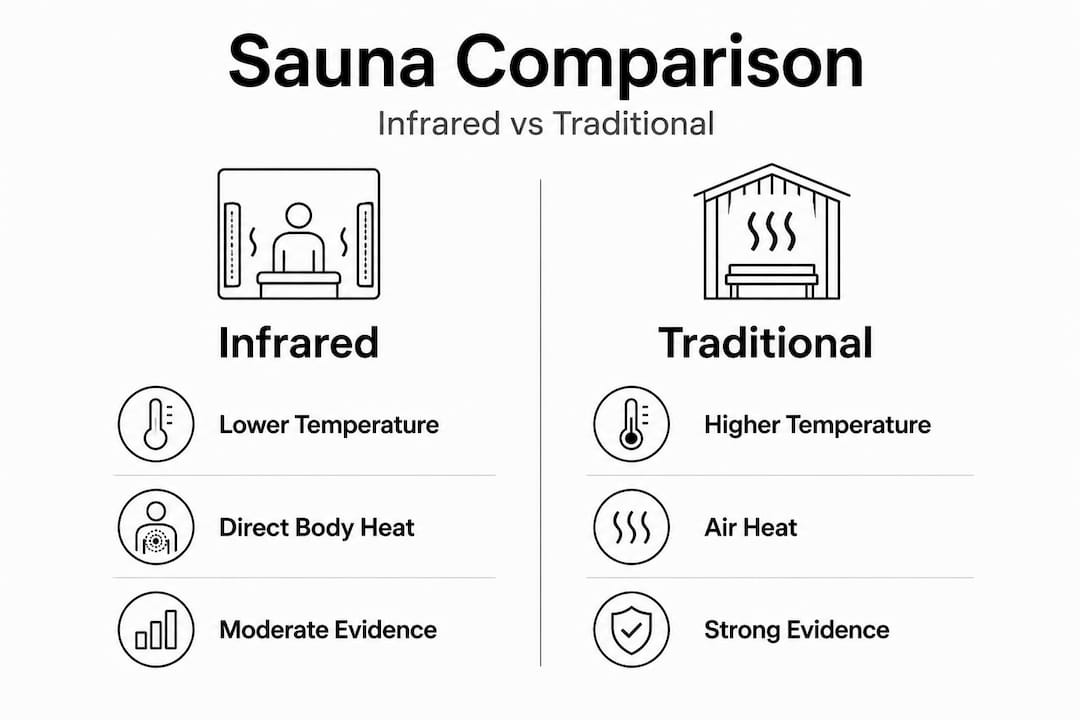
| Category | Infrared sauna | Traditional sauna |
|---|---|---|
| Cardiovascular evidence | Moderate | Strong (Finnish longitudinal studies) |
| Longevity research | Limited | Robust |
| Tolerability | High | Moderate |
| Session comfort | Easy to sustain | Can feel intense |
| Athlete recovery | Strong evidence | Moderate |
| Heat-sensitive users | Ideal | Not recommended |
| Accessibility in Las Vegas | Widely available | Less common |
Harvard Health research confirms that traditional saunas carry stronger long-term evidence for cardiovascular health and longevity, largely due to decades of Finnish population studies. Traditional saunas have been associated with reduced risk of sudden cardiac death and lower rates of dementia in large observational studies.
That said, infrared saunas have a clear edge in several areas:
- Lower temperature makes them accessible to people who can't tolerate intense heat
- Athlete recovery is better supported by recent infrared-specific research
- Session flexibility is higher because the heat feels less aggressive
- Comfort for newcomers is significantly better in infrared environments
- Heat-sensitive individuals, including those with certain autoimmune conditions, often tolerate infrared better
For Las Vegas residents specifically, the city's desert climate means your body is already managing significant heat exposure year-round. The lower ambient temperature of infrared saunas can be a real advantage, letting you get the cardiovascular and recovery benefits of heat therapy without compounding the thermal stress your body already faces outdoors. If you want to explore combining heat with cold exposure for maximum recovery effect, contrast therapy options offer a structured approach to alternating between the two modalities.
A reality check: Why evidence beats the hype for Las Vegas wellness
Here's the perspective we bring after working with athletes, busy professionals, and wellness seekers in Las Vegas: the infrared sauna industry is filled with language designed to sell, not inform. And that's a problem, because when expectations are wildly inflated, people either get disappointed and stop using a tool that genuinely works, or they use it as a substitute for medical care they actually need.
The real science paints a picture of modest but meaningful benefits. Infrared saunas support recovery, reduce soreness, mildly improve cardiovascular markers, and promote relaxation. That's legitimately valuable. But the industry tends to overstate the benefits, particularly around deep detox and profound muscle penetration, while underplaying what traditional saunas have going for them in terms of long-term cardiovascular research.
What bothers us most isn't that infrared saunas are "bad." They're not. It's that misinformation leads people to misuse them. Someone who believes sauna sessions eliminate alcohol toxins might feel falsely reassured. An athlete who expects deep muscle penetration to replace proper cool-down and nutrition will be let down. A person with uncontrolled high blood pressure who skips their doctor because they're "detoxing" in a sauna three times a week is putting themselves at risk.
In Las Vegas, where the wellness market is enormous and growing fast, the most valuable thing a provider can offer you is honest guidance. Evidence-backed protocols, realistic goal setting, and properly paired modalities will always outperform the promise of a miracle. Use infrared saunas for what they do well: recovery support, stress reduction, and circulation. Build them into a broader plan that includes strength training, good nutrition, quality sleep, and where appropriate, medical supervision. That's how results actually happen.
Experience proven benefits with Wellness Las Vegas
Now that you know the facts, here's how to start your own science-backed recovery journey. At Wellness Sauna & Cryotherapy, our infrared sauna treatments are grounded in exactly the kind of honest, evidence-based approach this article describes. No inflated promises, just real modalities that work when used correctly. Whether you're an athlete looking to reduce soreness and improve short-term performance, or a professional seeking stress relief and better sleep, our team designs sessions around your actual goals. Explore our athlete recovery sessions alongside complementary treatments like cryotherapy, cold plunge, and red light therapy for a complete recovery plan that actually delivers.
Frequently asked questions
Do infrared saunas really help with muscle recovery?
Yes, post-exercise infrared sauna sessions have been shown to improve jump performance, sprint acceleration, and reduce soreness in athletes over a 6-week period, but they do not increase muscle growth.
Is it true that infrared saunas detoxify the body?
No, actual detoxification is carried out by your liver and kidneys. Sweat contains only trace toxins, and the amount eliminated through sweating is negligible compared to what your internal organs process continuously.
Can anyone use an infrared sauna safely?
Most healthy people can, but those with heart conditions, thyroid disorders, implants, or who are pregnant should avoid infrared saunas and consult a physician first, following session safety guidelines of 15 to 20 minutes with proper hydration.
How does Las Vegas's climate affect infrared sauna use?
Las Vegas's desert heat means your body is already under thermal stress in summer. The lower operating temperature of infrared saunas makes them especially well-suited for recovery in a hot climate, delivering benefits without excessive additional heat burden.
What is the ideal session length for infrared saunas?
The recommended window is 15 to 20 minutes per session with adequate hydration before and after, which optimizes benefits while keeping heat exposure within a safe and productive range.