

Sauna therapy is widely seen as a way to unwind after a long day. But the science tells a far more compelling story. Frequent sauna use is linked to a 63% lower risk of sudden cardiac death, along with measurable gains in athletic recovery and circulation. For Las Vegas residents pushing hard at work, in the gym, or simply trying to feel their best in a demanding climate, understanding what sauna therapy actually does to your body can change how you approach your entire wellness routine. This article walks through the science, compares session types, covers real health outcomes, and gives you clear safety guidance.
Table of Contents
- How sauna therapy works: Science and mechanisms
- Traditional vs infrared saunas: Methods and session structures
- Evidence-based health impacts: Cardiovascular and recovery benefits
- Risks, safety, and practical guidance: What Las Vegas wellness seekers must know
- Our take: What most guides miss about sauna therapy and wellness
- Enhance your recovery and wellness with sauna therapy in Las Vegas
- Frequently asked questions
Key Takeaways
| Point | Details |
|---|---|
| Sauna triggers health adaptation | Sauna therapy creates mild thermal stress that improves circulation, reduces inflammation, and activates protective cellular responses. |
| Variety of methods matter | Traditional and infrared saunas produce different effects, with infrared preferred for recovery and heat sensitivity. |
| Strong evidence for heart health | Frequent sauna sessions dramatically reduce cardiovascular disease risk according to population studies. |
| Safety is crucial | Hydration, moderation, and medical consultation are key to avoiding dehydration and heat exhaustion. |
| Real results for recovery | Combining sauna sessions with proper protocols can enhance performance and relaxation for Las Vegas wellness seekers. |
How sauna therapy works: Science and mechanisms
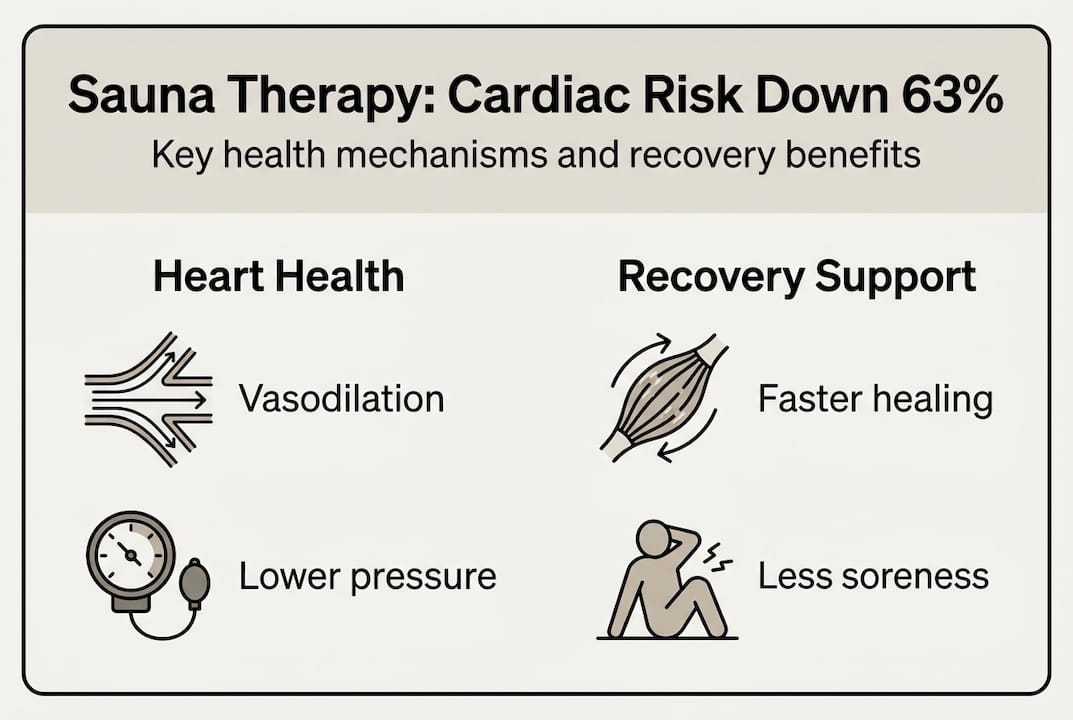
When you step into a sauna, your body responds quickly. Heat causes your blood vessels to widen, a process called vasodilation, which increases blood flow and reduces vascular resistance. Your heart rate rises to match the demand, mimicking what happens during moderate aerobic exercise. This is not just a passive experience. Your body is actively working.
"Saunas stimulate physiological responses resembling exercise, boosting cellular protection."
Sweat production ramps up significantly, helping flush metabolic waste and open pores for detoxification. At the cellular level, your body produces heat shock proteins. These are protective molecules that repair damaged proteins and guard cells against stress. Consistent sauna use also improves endothelial function, which is the health of the inner lining of your blood vessels, largely through increased nitric oxide production. Sauna triggers vasodilation, increased heart rate, and immune activation, all of which contribute to long-term resilience.
Key mechanisms at a glance:
- Vasodilation: Blood vessels widen, improving circulation and lowering blood pressure
- Increased heart rate: Cardiovascular system is engaged, similar to light to moderate exercise
- Sweat production: Supports detoxification through open pores and fluid release
- Heat shock proteins: Cellular repair molecules are upregulated, protecting against stress
- Nitric oxide release: Enhances endothelial function and arterial flexibility
- Immune activation: White blood cell production is stimulated during heat exposure
- Inflammation reduction: Markers like C-reactive protein tend to decrease with regular use
| Mechanism | Primary benefit |
|---|---|
| Vasodilation | Improved circulation and lower blood pressure |
| Heat shock protein upregulation | Cellular repair and stress protection |
| Nitric oxide release | Better endothelial and arterial health |
| Increased heart rate | Cardiovascular conditioning |
| Sweat and detoxification | Toxin clearance and skin health |
| Immune activation | Stronger systemic defense |
For more context on how these mechanisms connect to recovery and longevity, visit our wellness blog insights where we break down the latest research in plain language.
Pro Tip: Hydrate well before your session, sip water during longer infrared sessions, and rehydrate immediately after. Las Vegas heat makes fluid loss happen faster than you might expect, so this step is especially important here.
With the science laid out, let's see how different sauna methods shape these benefits.
Traditional vs infrared saunas: Methods and session structures
Not all sauna sessions are the same, and the method you choose matters for your specific goals. Traditional Finnish saunas use high-temperature air, often between 80 and 100 degrees Celsius, with steam bursts created by pouring water over hot stones. Sessions typically involve two to three rounds of ten to twenty minutes each, with cooling breaks between rounds. The intensity is high, and the cardiovascular demand is significant. Infrared saunas operate differently. They use light waves to heat your body directly rather than heating the surrounding air, which means the cabin temperature stays lower while tissue penetration is deeper. Traditional Finnish sauna involves 2 to 3 rounds of 10 to 20 minutes at 80 to 100 degrees Celsius, while infrared sessions run continuously for 20 to 45 minutes at lower temperatures.
| Feature | Traditional Finnish sauna | Infrared sauna |
|---|---|---|
| Temperature range | 80 to 100°C | 45 to 65°C |
| Session length | 2 to 3 rounds, 10 to 20 min each | 20 to 45 minutes continuous |
| Heat source | Heated air and steam | Light wave tissue penetration |
| Cardiovascular intensity | High | Moderate |
| Best for | Cardiovascular conditioning | Athletic recovery, heat-sensitive users |
| Post-workout suitability | Use with caution | Preferred option |
Traditional sauna: Pros and considerations
- Strong cardiovascular and heat conditioning effect
- Culturally established with decades of research behind it
- May impair next-day performance if used intensely after heavy training
- Requires cooling periods to avoid overheating
Infrared sauna: Pros and considerations
- Gentler on the cardiovascular system, making it accessible to more people
- Deeper tissue penetration supports muscle recovery and inflammation reduction
- Can be used more consistently after workouts without performance drawbacks
- Ideal for Las Vegas athletes and professionals with demanding schedules
Explore the full list of infrared sauna benefits and what to expect from a session at our facility.
Pro Tip: If you train hard regularly and need to recover without compromising next-day performance, infrared is the smarter choice. You get the cellular and circulatory benefits without the intensity that can leave you fatigued.
Understanding session types helps clarify why sauna use can yield different health benefits.
Evidence-based health impacts: Cardiovascular and recovery benefits
The research on sauna therapy and cardiovascular health is striking. A major population study found that frequent sauna use at four to seven sessions per week was linked to a 47% lower risk of hypertension, a 63% reduction in sudden cardiac death, and a 50% drop in fatal cardiovascular disease compared to once-weekly use. These are not small effects.
"Observational studies suggest strong longevity gains; causal RCTs more mixed."
For athletes, the numbers are equally interesting. Post-exercise infrared sauna use has been associated with a 15% increase in countermovement jump height, pointing to real gains in explosive power recovery. That said, it does not appear to enhance muscle hypertrophy on its own.
Sauna frequency and health outcomes:
| Sessions per week | Hypertension risk reduction | Sudden cardiac death reduction | Fatal CVD reduction |
|---|---|---|---|
| 1 session | Baseline | Baseline | Baseline |
| 2 to 3 sessions | Moderate reduction | Moderate reduction | Moderate reduction |
| 4 to 7 sessions | 47% lower risk | 63% lower risk | 50% lower risk |
Steps to maximize health and recovery:
- Schedule sessions consistently. Frequency matters more than session length. Aim for at least four visits per week to see meaningful cardiovascular gains.
- Pair sauna with proper hydration. Electrolyte replenishment after each session supports recovery and prevents the fatigue that comes from fluid loss.
- Choose your session type wisely. Use infrared post-workout for recovery and consider traditional sauna on rest days for cardiovascular conditioning.
- Allow adequate cooldown time. Cooling after each round lets your body regulate and extend the circulatory benefits.
- Track your progress. Monitor resting heart rate, recovery time, and sleep quality over weeks to see how sauna fits your wellness baseline.
Pairing sauna with contrast therapy for recovery is one of the most effective ways to amplify these results. Alternating heat and cold dramatically accelerates circulation and muscle repair. Check out our wellness packages to find the right combination for your goals.
While the benefits are compelling, understanding risks and nuances is essential for safe application.
Risks, safety, and practical guidance: What Las Vegas wellness seekers must know
Sauna therapy is safe for most healthy adults, but it is not without risk. The biggest concerns are dehydration and heat exhaustion, both of which are amplified by Las Vegas's dry, hot climate. Risk of dehydration and heat exhaustion increases for elderly individuals, pregnant women, and those with heart failure, low blood pressure, or valve disease. Starting with just five minutes and building up gradually is the recommended approach for new users.
"Always consult a physician before starting sauna therapy, especially with underlying health issues."
Additionally, population studies show CVD benefits, but randomized controlled trials are more mixed, and infrared saunas tend to produce a safer, milder cardiovascular response than traditional ones. This distinction matters when personalizing your plan.
Who should use caution or avoid sauna therapy:
- Individuals with severe heart failure or unstable angina
- Those with low blood pressure or significant heart valve disease
- Pregnant women, especially in the first trimester
- Anyone who has consumed alcohol within several hours of a session
- People on medications that affect body temperature regulation
- Those recovering from acute illness or fever
Practical safety steps for first-timers:
- Drink at least 16 ounces of water before entering the sauna.
- Start with a five-minute session and exit if you feel dizzy, nauseous, or short of breath.
- Cool down between rounds by sitting in a temperate room or taking a cool shower.
- Avoid eating a heavy meal within two hours of your session.
- Do not use a sauna alone if you have any known cardiovascular conditions.
- Check with your doctor if you take medications that affect heat tolerance.
Our professional wellness services include guidance from trained staff who can help you design a session plan that fits your health profile. If you plan to make sauna a regular practice, explore membership options that give you consistent access with built-in flexibility.
Knowing both the science and the safety, let's discuss how to put sauna therapy to work for wellness and recovery in Las Vegas.
Our take: What most guides miss about sauna therapy and wellness
Most articles treat sauna therapy as a simple add-on to your routine. We see it differently. The population data is encouraging, but your individual results depend heavily on your overall lifestyle. Sleep quality, nutrition, stress levels, and consistency all influence how much benefit you actually get. Sauna is a powerful tool, not a shortcut.
We also think too many guides skip over the cooling period and hydration windows, both of which are critical to getting the full effect. Rushing out of a session and going straight back to your day leaves real recovery gains on the table.
For athletic recovery specifically, infrared sauna is where we see the strongest, most consistent results. For cardiovascular conditioning, traditional sauna holds the edge. Using both strategically, alongside therapies like dry float recovery, creates a recovery protocol that works on multiple systems at once.
Pro Tip: Use sauna as part of a broader recovery protocol, not a stand-alone solution. The best outcomes come when heat therapy is combined with good sleep, hydration, and complementary treatments.
Enhance your recovery and wellness with sauna therapy in Las Vegas
Ready to experience the real benefits of sauna therapy? At Wellness Sauna & Cryotherapy in Las Vegas, we offer premium infrared sauna sessions designed for recovery, circulation, and long-term wellness. Whether you are an athlete, a professional managing stress, or someone focused on longevity, our team will help you find the right approach. Pair your sauna sessions with contrast therapy options like cold plunge for even faster recovery. Browse our wellness packages to find a plan that fits your schedule and goals. Book your session today and start feeling restored, energized, and ready for whatever comes next.
Frequently asked questions
How often should I use sauna therapy for maximum benefit?
Studies suggest that 4 to 7 sessions per week deliver the most significant cardiovascular and recovery benefits, including lower hypertension risk and reduced sudden cardiac death rates.
Is infrared sauna safer for beginners or people sensitive to heat?
Yes. Infrared saunas produce a milder cardiovascular response compared to traditional saunas, making them a better starting point for heat-sensitive individuals or those new to sauna therapy.
Are there health risks associated with sauna therapy?
The main risks include dehydration and heat exhaustion, particularly for elderly users, pregnant women, and those with heart conditions. Starting slow and staying hydrated significantly reduces these risks.
Can sauna therapy improve athletic performance?
Post-exercise infrared sauna has been shown to increase jump height by up to 15%, reflecting genuine gains in explosive power recovery, though it does not directly increase muscle size.
Does sauna therapy improve heart health?
Observational studies show strong associations between regular sauna use and lower cardiovascular risk, though randomized controlled trials show more varied results, highlighting the value of combining sauna with a healthy lifestyle.