
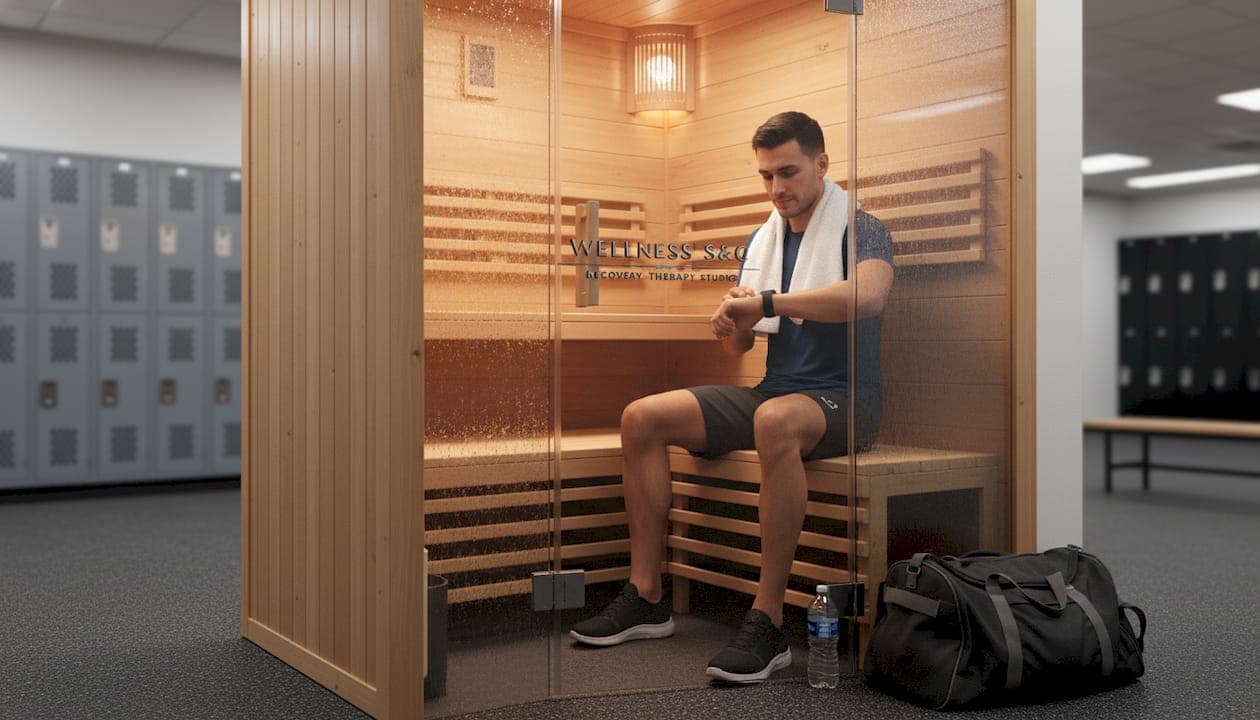
Most athletes treat recovery as an afterthought. Train hard, sleep, repeat. But single infrared sauna sessions after exercise measurably improve neuromuscular recovery and reduce muscle soreness, according to published research. Infrared saunas are not just a relaxation luxury. For Las Vegas athletes managing packed training schedules, back-to-back competitions, and year-round heat stress, they are a legitimate performance tool. This guide breaks down exactly how infrared sauna therapy works for your body, what the research actually shows, how it compares to traditional sauna, and how to use it safely and strategically.
Table of Contents
- How infrared sauna therapy works for athletes
- Benefits of infrared sauna for athletic recovery
- Infrared vs. traditional sauna for athletes: What's best?
- Practical tips and safety for using infrared saunas
- Why focusing on recovery, not just performance, transforms Las Vegas athletes
- Ready for better recovery? Experience infrared sauna in Las Vegas
- Frequently asked questions
Key Takeaways
| Point | Details |
|---|---|
| Speeds muscle recovery | Infrared sauna sessions promote faster recovery and reduce muscle soreness after training. |
| Balances comfort and results | Lower temperatures make infrared saunas accessible for beginners while still producing real benefits. |
| Best for acute recovery | Athletes needing next-day performance gain the most from post-exercise infrared sauna use. |
| Safer with correct use | Following guidelines ensures effective results while minimizing risks and side effects. |
How infrared sauna therapy works for athletes
What actually happens in your body during an infrared sauna session is different from what most people expect. Unlike traditional saunas that heat the air around you, infrared saunas heat your body directly through radiation at lower air temperatures, typically between 104 and 140°F (40 to 60°C), and penetrate deeper into tissue than conventional heat. That distinction matters for athletes.
Because the air temperature stays lower, your cardiovascular system is not under the same strain as it would be inside a 190°F traditional sauna. You can tolerate longer sessions more comfortably, which allows the key physiological processes more time to activate.
Here is what is happening at a cellular level:
- Heat shock protein upregulation: Your cells produce protective proteins that support cellular repair and reduce inflammation after hard training.
- Increased blood flow: Infrared exposure causes vasodilation (widening of blood vessels), delivering more oxygen and nutrients to fatigued muscle tissue.
- mTOR pathway activation: This cellular signaling pathway is linked to muscle repair and protein synthesis, supporting recovery between sessions.
- Reduced inflammatory markers: Circulating inflammation decreases, which correlates directly with less perceived soreness.
| Feature | Infrared sauna | Traditional sauna |
|---|---|---|
| Air temperature | 104–140°F (40–60°C) | 150–195°F (65–90°C) |
| Heat source | Radiant infrared waves | Heated air or steam |
| Tissue penetration | Moderate (surface to deeper tissue) | Primarily surface |
| Sweat rate | Moderate to high | High |
| Cardiovascular load | Lower | Higher |
| Session comfort | Easier to tolerate | More intense |
You can explore all the ways we apply infrared sauna therapy services at our Las Vegas facility to support exactly these mechanisms.
Pro Tip: Use infrared sauna after your workout, not before. Pre-exercise heat can cause premature fatigue and reduce neuromuscular output. Save it for your cool-down window, ideally within 30 to 60 minutes post-training.
Benefits of infrared sauna for athletic recovery
Now that you understand the science, here is how those mechanisms translate into real gains for your training and performance.

The most significant finding from recent research: post-exercise infrared sauna improved countermovement jump height by 15% and increased peak power in female team sport athletes. Jump height and peak power are direct markers of neuromuscular readiness. If those numbers go up after recovery sessions, it means your muscles are more prepared to perform again sooner.
Here is the stepwise picture of why that happens:
- Reduced soreness: Lower inflammatory markers mean less delayed onset muscle soreness (DOMS), so you wake up the next morning feeling more capable of a quality session.
- Restored muscle function: Faster return of neuromuscular output means your force production and reaction time bounce back between training days or games.
- Better training consistency: When recovery is faster and soreness is managed, you show up to each session at a higher baseline, and that compounds over time.
"The benefits of infrared sauna are most likely the result of supporting acute recovery, which enables better training quality over time. The direct effect is not hypertrophy, but rather the conditions that allow consistent, high-quality training to produce results." — Medical Xpress
That nuance is important. Infrared saunas are not a shortcut to bigger muscles. They are a recovery accelerator. You still have to put in the work. But by reducing the physical cost of each session, you can train harder and more often without breaking your body down faster than it rebuilds.
Athletes who incorporate infrared sauna regularly report better sleep quality, reduced joint stiffness, and improved mood between sessions. Those soft benefits are real and connected to the same physiological pathways. Check out our infrared sauna packages if you want a structured approach that fits your training schedule.
Infrared vs. traditional sauna for athletes: What's best?
You might wonder whether traditional saunas or contrast therapy deliver similar or better recovery results. The honest answer: it depends on your goal.
| Factor | Infrared sauna | Traditional sauna |
|---|---|---|
| Recovery speed | Strong evidence | Moderate evidence |
| Cardiovascular benefit | Limited | Stronger |
| Comfort for beginners | High | Lower |
| Heat acclimation | Moderate | Better suited |
| Session duration | 20–40 min typical | 10–20 min typical |
| Post-exercise use | Highly practical | Can be intense |
It is worth noting that infrared claims of deep muscle penetration are sometimes overstated in marketing, and the cardiovascular benefits associated with regular traditional sauna use are better documented in long-term studies. Neither option is universally superior.
Use infrared sauna when:
- You need rapid recovery between training sessions or games
- You are new to heat therapy and want a more comfortable entry point
- Post-exercise muscle soreness is your primary concern
- You prefer a lower-intensity, private session environment
Use traditional sauna when:
- Your goal is heat acclimation for outdoor or endurance sport performance
- You want longer-term cardiovascular conditioning benefits
- You have an established heat tolerance and prefer higher intensity
For many Las Vegas athletes, the best answer is both, used strategically at different points in your training week. Smart contrast therapy recovery protocols that pair heat with cold exposure (like our cold plunge) have their own strong evidence base for recovery. You can also browse our recovery insights for guidance on combining these modalities.
Pro Tip: If you are new to saunas or sensitive to heat, start with infrared. Its lower air temperature gives you a genuinely manageable first experience while still delivering measurable recovery benefits.
Before your sauna session, making sure your body is properly prepared matters. Solid athlete warm-up routines before training can reduce injury risk and improve the quality of the workout you are recovering from.
Practical tips and safety for using infrared saunas
Understanding the pros and cons is only part of the equation. Safe, strategic use determines whether you get results or run into trouble.
Here is a step-by-step protocol for an optimal athlete infrared sauna session:
- Finish your workout first. Wait 10 to 20 minutes after training before entering the sauna to allow your core temperature to stabilize slightly.
- Hydrate before you go in. Drink at least 16 oz of water beforehand. You will sweat significantly, and electrolyte loss accelerates dehydration.
- Start with 10 to 15 minutes. Especially in your first few sessions. Build toward 20 to 30 minutes as your body adapts.
- Bring electrolytes. A small electrolyte drink or supplement during or after the session helps replace what you lose through sweat.
- Cool down gradually. Step out, rest at room temperature, and drink water before heading back to normal activity.
- Limit frequency. For recovery purposes, 2 to 3 sessions per week is the evidence-based sweet spot.
"Starting gradually is not just for beginners. Even experienced athletes can experience lightheadedness or cardiovascular stress if they jump into long, frequent sessions too quickly. Progress your exposure the same way you would any new training stimulus." — Dr. Ruscio
As infrared sauna risks include mild cardiovascular stress, dehydration, and potential EMF exposure with lower-quality equipment, it is worth choosing a facility that uses low-EMF certified panels and maintains clean, well-ventilated rooms.
Skip infrared sauna or get medical clearance if you:
- Are pregnant
- Have heat intolerance or a history of heat-related illness
- Take medications that affect blood pressure, heart rate, or sweating
- Have an active cardiovascular condition
- Are currently running a fever or fighting an illness
We also recommend pairing your infrared sessions with complementary recovery tools. Dry float and red light therapy can extend the relaxation and cellular repair benefits you get from infrared, particularly on high-volume training days.
Why focusing on recovery, not just performance, transforms Las Vegas athletes
Here is the contrarian view: most competitive athletes in Las Vegas are not undertrained. They are under-recovered.
The city's sports culture runs fast. Year-round leagues, frequent tournaments, and the pressure to always be ready means athletes stack training blocks without building equal recovery blocks. The result is a slow erosion of performance that gets misread as a need for more volume or intensity.
The research is clear that infrared saunas support acute recovery for better training quality, not direct muscle growth. That reframe matters. Recovery is not passive. It is an active investment in your next performance.
We consistently see athletes who add structured recovery routines, including infrared sauna, quality sleep, and sports massage therapy, outperform those who simply push harder. The edge is not always in the extra rep. Sometimes it is in showing up tomorrow fully restored.
Challenge yourself this week: block out two post-training recovery sessions and treat them with the same commitment you give your hardest workouts. The results will show up where it counts.
Ready for better recovery? Experience infrared sauna in Las Vegas
You now have the science, the protocols, and the context to make infrared sauna a real part of your performance strategy. The next step is putting it into practice.
At Wellness Sauna & Cryotherapy in Las Vegas, we make it easy to try an infrared sauna session in a clean, private, premium environment designed for athletes who take recovery seriously. Whether you want a standalone session or a full recovery plan, our recovery service packages are built to fit your schedule and goals. You can also add contrast therapy options to amplify your results. Book your session today and feel the difference that purposeful recovery makes.
Frequently asked questions
How often should athletes use infrared saunas for recovery?
For most athletes, 2 to 3 sessions per week after training is optimal. Research shows 3x/week sessions of around 10 minutes improved recovery without negative effects.
Are infrared saunas safe for daily use?
Daily use is generally safe for healthy individuals, but it is wise to start with less frequent sessions. Those with medical concerns should consult a doctor, as mild cardiovascular stress and dehydration are real risks with overuse.
What's the main difference between infrared and traditional sauna for athletes?
Infrared saunas are gentler and operate at lower air temperatures, making them easier to tolerate post-workout. Traditional saunas offer stronger cardiovascular stimulation, while infrared heats the body directly, which is better suited for rapid recovery.
Who should avoid infrared saunas?
Anyone pregnant, heat-sensitive, on medications affecting heart rate or blood pressure, or with specific cardiovascular conditions should skip infrared saunas or get medical approval first, as certain groups face elevated risks that require professional guidance.