
Freezing temperatures aren't just for elite athletes recovering after a championship game. Wellness cryotherapy has moved into the mainstream, and for good reason. Whether you're an active professional chasing faster muscle recovery, someone managing daily stress, or a dedicated athlete keeping your body in peak condition, cryotherapy offers measurable, science-backed benefits. Las Vegas is quickly becoming a hub for advanced recovery therapies, and understanding what cryotherapy actually does, who it's for, and how it stacks up against other cold treatments will help you make the right choice for your body and goals.
Table of Contents
- What is wellness cryotherapy?
- How does cryotherapy support recovery and performance?
- Safety, medical screening, and who should avoid cryotherapy
- Cryotherapy vs. cold water immersion: What's best for you?
- Our perspective: The real impact and future of wellness cryotherapy
- Discover wellness cryotherapy in Las Vegas
- Frequently asked questions
Key Takeaways
| Point | Details |
|---|---|
| Reduces inflammation | Cryotherapy lowers inflammatory markers and helps relieve pain for both athletes and wellness seekers. |
| Supports recovery | Short cold sessions accelerate muscle repair and reduce workout soreness. |
| Safety matters | Not everyone qualifies—medical screening and awareness of contraindications are necessary before any session. |
| Choose your method | Cryotherapy is fast and convenient; cold water immersion offers deeper relief—match your therapy to your goals. |
What is wellness cryotherapy?
Cryotherapy, at its core, is the controlled exposure of your body to extremely cold air for a short period, typically two to four minutes. Think of it like standing outside on the coldest day you can imagine, except the experience is precise, monitored, and purpose-built for your recovery and wellness. In a whole-body cryotherapy (WBC) session, you step into a chamber where temperatures drop between -200°F and -250°F. Your body reacts immediately, triggering a cascade of physiological responses that, over time, produce real benefits.
The cold exposure causes blood vessels near the skin to constrict rapidly, reducing blood flow to extremities. Your body interprets this as a natural stressor and responds by increasing circulation to protect your vital organs. When you step out, blood rushes back to your limbs, carrying oxygen and nutrients that support tissue repair and recovery. This process is not just anecdotal. Research consistently shows that cryotherapy for recovery reduces inflammatory markers and supports faster healing.
One of the most compelling pieces of evidence comes from a meta-analysis on inflammation in cryotherapy involving 11 randomized controlled trials with 274 participants. The findings showed that WBC significantly reduces the pro-inflammatory cytokine IL-1β (SMD of -2.08 pg/mL) while increasing the anti-inflammatory cytokine IL-10 (SMD of 0.78 pg/mL). These results are especially pronounced in athletes and individuals managing obesity, two groups where inflammation is a persistent challenge.
Las Vegas cryotherapy services now offer both whole-body chambers and localized cryotherapy, which targets specific areas like the knee, shoulder, or lower back. The flexibility makes this treatment useful for a wide range of people, not just competitive athletes.
Here's a quick summary of the top benefits you can expect from regular wellness cryotherapy sessions:
- Faster muscle recovery after intense training or physical activity
- Reduced inflammation and soreness throughout the body
- Mood boost from the release of endorphins triggered by cold exposure
- Improved immune function through increased white blood cell activity
- Better sleep quality reported by consistent users
- Skin tightening effects from improved circulation and collagen stimulation
"Cryotherapy isn't a trend. It's a clinically studied recovery tool that works by triggering the body's own protective and repair mechanisms. When used consistently, the cumulative effect on inflammation and recovery is measurable and meaningful."
The key word is consistency. Like any wellness treatment, cryotherapy delivers its strongest results when it becomes part of your regular routine, not just a one-time experience.
How does cryotherapy support recovery and performance?
With a foundational understanding of cryotherapy, let's look at how it delivers tangible benefits for recovery and performance. This is where the science gets genuinely exciting, especially if you're an athlete or someone who trains hard and needs to bounce back quickly.
Muscle damage is a normal part of intense physical training. When you lift heavy, sprint, or compete, you create microscopic tears in muscle fibers. These tears are how muscles grow stronger, but the repair process involves inflammation, soreness, and downtime. Cryotherapy accelerates that repair process by reducing the inflammatory response without suppressing it entirely.
Evidence from cryotherapy in sports medicine confirms that WBC significantly decreases creatine kinase (CK), a key marker of muscle damage, while also reducing perceived soreness. Elite athletes have caught on. LeBron James, Cristiano Ronaldo, and Floyd Mayweather Jr. have all made cryotherapy a regular part of their recovery protocols. That's not a coincidence. When performance is your livelihood, every recovery advantage matters.
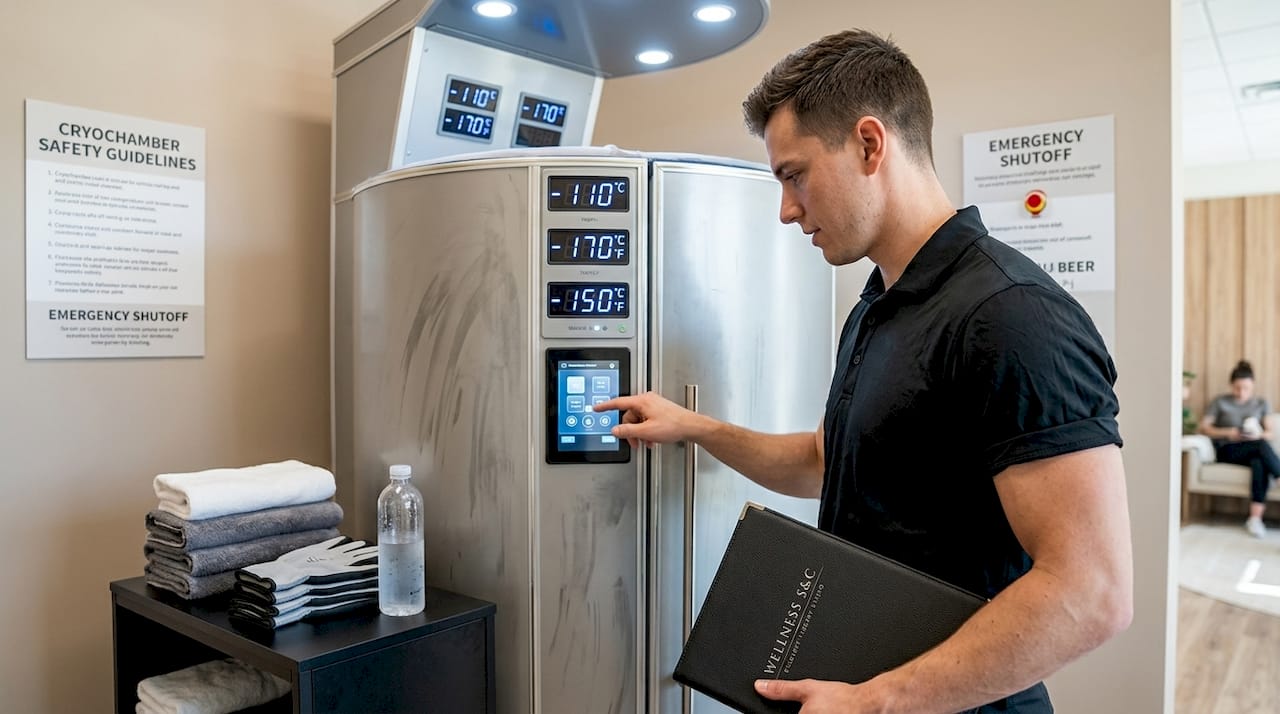
Here's how cryotherapy compares across key recovery metrics:
| Recovery factor | Without cryotherapy | With regular cryotherapy |
|---|---|---|
| Muscle soreness (DOMS) | Peaks 24-48 hours post-training | Noticeably reduced within 24 hours |
| CK levels (muscle damage) | Elevated for 48-72 hours | Reduced significantly faster |
| Return to training | Often 2-3 days | Can return sooner with reduced fatigue |
| Mood and energy | Fatigue-related dip common | Endorphin boost reported post-session |
| Inflammation markers | Sustained elevation | Reduced IL-1β; elevated IL-10 |
Beyond muscle recovery, cryotherapy has a meaningful impact on mental performance and stress. Cold exposure activates the release of norepinephrine, a neurotransmitter linked to focus, mood regulation, and alertness. Many people report leaving a session feeling energized, clear-headed, and emotionally reset. For anyone juggling a demanding training schedule alongside work and life stress, that mental clarity is as valuable as the physical recovery.
Pro Tip: Schedule your cryotherapy session within 30-60 minutes after your most intense training days. This timing aligns with the body's peak inflammatory response, so the treatment is most effective when your muscles need it most.
Pairing cryotherapy with other recovery therapies amplifies the results. Many athletes who use athlete recovery packages combine cryo sessions with dry float and red light therapy for a layered recovery protocol that addresses inflammation, muscle tension, and nervous system recovery simultaneously.
Additional performance and recovery benefits worth noting:
- Reduced fatigue between training sessions, allowing for higher training volume
- Improved range of motion when used alongside stretching or physical therapy
- Lower cortisol levels, which directly supports muscle preservation and recovery
- Stronger immune response, meaning fewer sick days disrupting your training schedule
Safety, medical screening, and who should avoid cryotherapy
Benefiting from cryotherapy begins with proper safety checks. Here's what you need to know before stepping into a cold chamber. This isn't a section to skip, even if you feel healthy and fit. Cryotherapy is safe for most people, but it involves significant physiological stress that makes medical screening essential before your first session.
At Wellness Sauna and Cryotherapy in Las Vegas, every new client completes a health intake assessment before participating. This step exists to protect you, not to create barriers. The team is trained to identify conditions that make cryotherapy unsafe and to recommend alternatives when needed.
Contraindications to cryotherapy are well established. According to cryotherapy contraindications and safety reviewed by expert consensus, the following conditions require medical clearance or complete avoidance:
- Uncontrolled hypertension (high blood pressure that isn't managed medically)
- Raynaud's disease or Raynaud's phenomenon (abnormal blood vessel response to cold)
- Cold urticaria or cold allergies (skin reactions triggered by cold exposure)
- Pregnancy at any stage
- Severe anemia (insufficient red blood cells to handle cold-induced vascular stress)
- Claustrophobia (may make chamber sessions distressing or unsafe)
- Acute infections or fever (cryotherapy should not be used when the body is actively fighting infection)
- Serious cardiovascular conditions or cardiopathies (heart conditions that could be stressed by rapid vasoconstriction)
"Safety in cryotherapy is not about fear. It's about making sure the treatment supports your health rather than creating unnecessary risk. A proper screening process ensures that every session you complete is working for you."
If you're uncertain about your eligibility, Las Vegas cryotherapy safety reviews will give you more detail on what to expect from the intake process. For those with mild sensitivities to cold, a cold plunge screening can help gauge your body's response in a more controlled setting before you commit to a full cryotherapy chamber experience.
For individuals who cannot use cryotherapy due to medical reasons, there are excellent alternative therapies available, including red light therapy and infrared sauna treatments, which offer anti-inflammatory and recovery benefits without cold exposure.
What should a safe cryotherapy session look like in practice? You'll wear protective gloves, socks, and minimal clothing. The session lasts two to four minutes. Staff monitor your session from outside. You can exit at any time. This is a controlled, professional environment designed to make you feel safe and supported throughout.
Cryotherapy vs. cold water immersion: What's best for you?
Many Las Vegas wellness seekers get confused choosing between cryotherapy and cold water therapies. Here's how to decide what fits your needs. Both methods use cold exposure therapeutically, but they work differently and produce different outcomes depending on your goal.
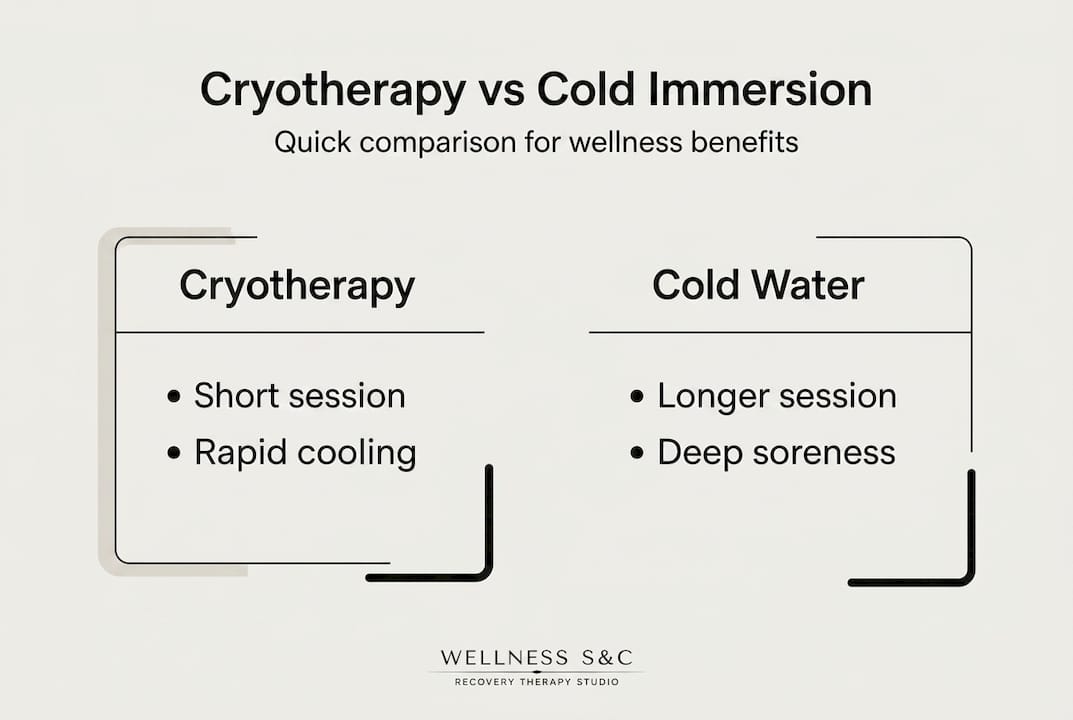
Cold water immersion (CWI) involves submerging the body, or specific body parts, in cold water, typically between 50°F and 59°F, for anywhere from five to twenty minutes. Cryotherapy uses much colder air temperatures but for a much shorter time. The depth of tissue cooling differs significantly between these two approaches.
Research published in a review of cryotherapy vs. cold water immersion shows that CWI is superior for delayed onset muscle soreness (DOMS) relief, with a mean difference of 1.07 in soreness reduction at the 24-hour mark compared to cryotherapy. Cold water reaches deeper muscle tissue because water transfers heat away from the body roughly 25 times more efficiently than air. This makes CWI particularly effective when deep tissue inflammation is the primary concern.
Here's a direct comparison to help you decide:
| Factor | Whole-body cryotherapy | Cold water immersion |
|---|---|---|
| Session length | 2-4 minutes | 10-20 minutes |
| Temperature range | -200°F to -250°F | 50°F to 59°F |
| Depth of tissue cooling | Superficial to moderate | Deeper muscle tissue |
| DOMS relief | Moderate | Superior (MD 1.07 at 24h) |
| Convenience | Fast, dry, clean | Requires water setup, wetter experience |
| Accessibility in Las Vegas | Widely available | Available as cold plunge service |
| Best for | Quick sessions, mood, inflammation | Muscle soreness, deep recovery |
However, the research isn't entirely clear-cut. Study protocols vary significantly across trials, which makes direct comparisons tricky. Cryotherapy wins on convenience, speed, and the quality of the controlled environment. You can be done in under 10 minutes, fully dressed, and ready for your next appointment. There's no wet skin, no drying off, and no temperature maintenance equipment to worry about on your end.
Pro Tip: If you want the best of both worlds, contrast therapy combines heat and cold exposure in alternating cycles. This method drives circulation more aggressively than either therapy alone, promoting faster toxin clearance and muscle recovery.
Your choice also depends on your tolerance for discomfort. Some people find cold water immersion more psychologically challenging because of the sustained full-body contact with cold water. Others find cryotherapy's intensity in the first 30 seconds more startling but prefer the shorter duration.
If you want to explore therapy options more broadly, comparing all the wellness services available in Las Vegas gives you a full picture. And if you're curious about a gentler recovery option, dry float details explain how dry float therapy supports nervous system recovery without cold exposure at all.
The honest answer? Most serious athletes benefit from using both. CWI on heavy training days for deep soreness, cryotherapy mid-week for maintenance and mood, and contrast therapy on recovery days for full circulatory benefit.
Our perspective: The real impact and future of wellness cryotherapy
We've helped countless clients in Las Vegas work through the confusion around cryotherapy, and here's the honest take: the therapy is genuinely effective, but the marketing around it sometimes outpaces the science.
The evidence for cryotherapy's impact on inflammation reduction and pain relief is strong. Sports medicine and rheumatology research consistently support it. Where the evidence is thinner is in direct performance enhancement claims. Cryotherapy may not make you measurably faster or stronger, but it does help you recover well enough to train harder and more consistently. That compounding effect over weeks and months is where the real performance gains live.
One thing we feel strongly about: electric cryotherapy chambers are safer than nitrogen-based systems. Nitrogen chambers can expose the user to risk of oxygen displacement in an enclosed space. Electric systems maintain consistent, monitored temperatures without that concern. When you're choosing a facility, ask about the chamber type. It matters.
Las Vegas is genuinely emerging as an integrated wellness destination, not just for entertainment. The demand for advanced recovery services is real, and we expect contrast methods and layered recovery protocols to become the standard rather than the exception. The future of wellness cryotherapy is personalized, stacked, and data-informed. We're already there.
Discover wellness cryotherapy in Las Vegas
If you're ready to experience the benefits for yourself, Wellness Sauna and Cryotherapy in Las Vegas has everything you need in one place. From standalone sessions to curated recovery programs, you can find the right fit for your body and your schedule. Explore wellness cryotherapy in Las Vegas to book your first session or learn more about what to expect. Looking to pair cryo with heat therapy? Our infrared sauna is one of the most popular add-ons for clients seeking both detoxification and recovery in a single visit. For athletes or anyone with consistent recovery needs, our recovery packages offer the best value and a structured approach to building real, lasting results.
Frequently asked questions
Is cryotherapy safe for everyone?
No. Individuals with uncontrolled hypertension, Raynaud's disease, cold allergies, pregnancy, severe anemia, claustrophobia, acute infections, or serious heart conditions should avoid cryotherapy, and medical screening is required before any session begins.
What are the main benefits of wellness cryotherapy?
Cryotherapy reduces inflammation, speeds up muscle recovery, lowers soreness, and often improves mood, with research showing significant reductions in pro-inflammatory IL-1β and increases in anti-inflammatory IL-10 following whole-body sessions.
How does cryotherapy compare to cold water immersion?
Cold water immersion offers deeper tissue cooling and greater DOMS relief at the 24-hour mark, while cryotherapy is faster, cleaner, and easier to fit into a busy schedule, making both valuable depending on your recovery goals.
What kind of cryotherapy chambers are safest?
Electric cryotherapy chambers are currently considered safer than nitrogen-based systems, as confirmed by chamber safety evidence, which notes that nitrogen systems carry risks related to oxygen displacement that electric chambers avoid entirely.