
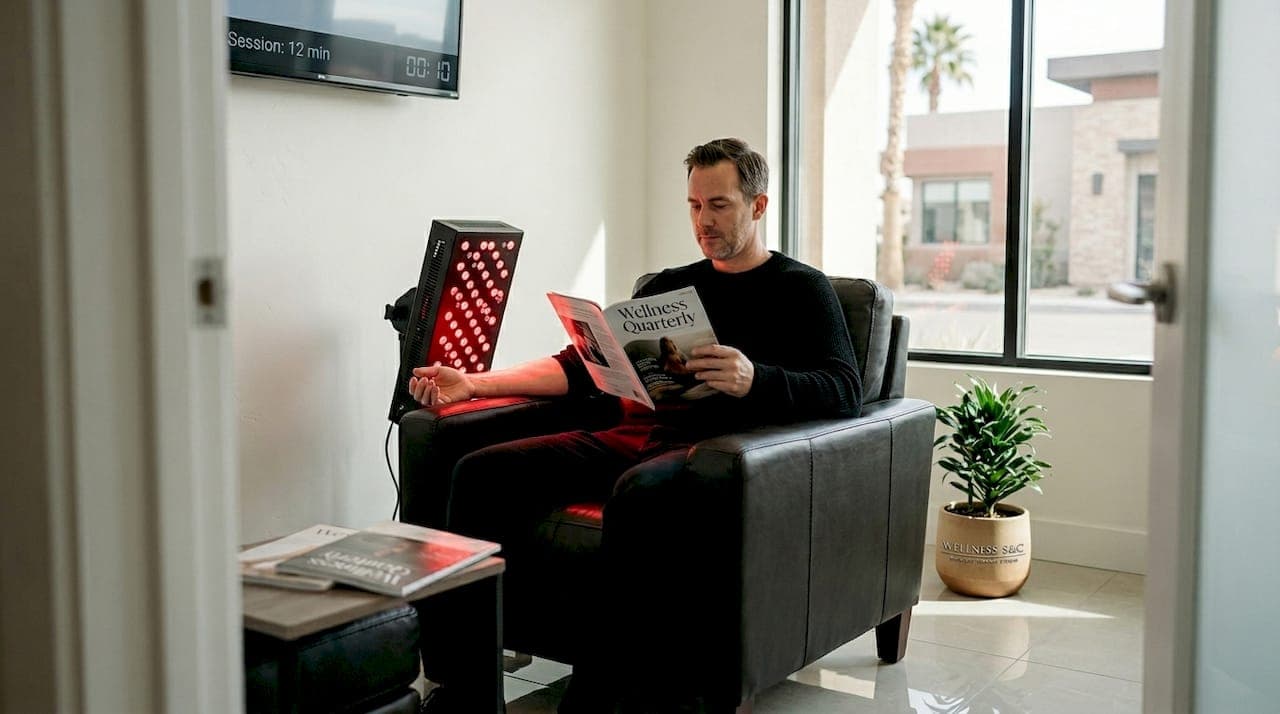
Red light therapy has moved well beyond the wellness trend label. Clinical research shows it reduces pain scores by up to 32% in conditions like knee osteoarthritis and tendinopathies, cuts delayed onset muscle soreness by 30%, and speeds postoperative recovery by up to 10 days. If you've been curious about whether this technology is worth your time and money, or if you've wondered how to separate the legitimate science from the marketing noise, this guide breaks it all down. You'll leave with a clear understanding of what red light therapy is, what it genuinely heals, and how to use it effectively.
Table of Contents
- What is red light therapy and how does it work?
- Evidence-based benefits: What does red light therapy actually heal?
- How to use red light therapy safely and effectively
- Limitations, misconceptions, and what most people get wrong
- Our take: What truly matters when choosing red light therapy in Las Vegas
- Experience red light therapy and complementary recovery in Las Vegas
- Frequently asked questions
Key Takeaways
| Point | Details |
|---|---|
| Clinical benefits proven | Red light therapy can reduce pain, boost healing, and enhance recovery for certain conditions. |
| Correct dose matters | Proper dosing, wavelength, and power are key for safe and effective outcomes. |
| Not a cure-all | Claims for weight loss and general wellness lack strong evidence, so realistic expectations are important. |
| Expert guidance helps | Professional guidance—in Las Vegas clinics or with FDA-cleared devices—delivers the best results. |
What is red light therapy and how does it work?
To understand what red light therapy can actually do, let's see how it works at the cellular level.
Red light therapy goes by several names in clinical settings. The most precise term is photobiomodulation therapy, or PBMT. The basic idea is straightforward: specific wavelengths of light penetrate your skin and interact with cells in a way that triggers measurable biological changes. Think of it like sunlight charging a solar panel, except here the "panel" is your mitochondria, the part of every cell responsible for producing energy.
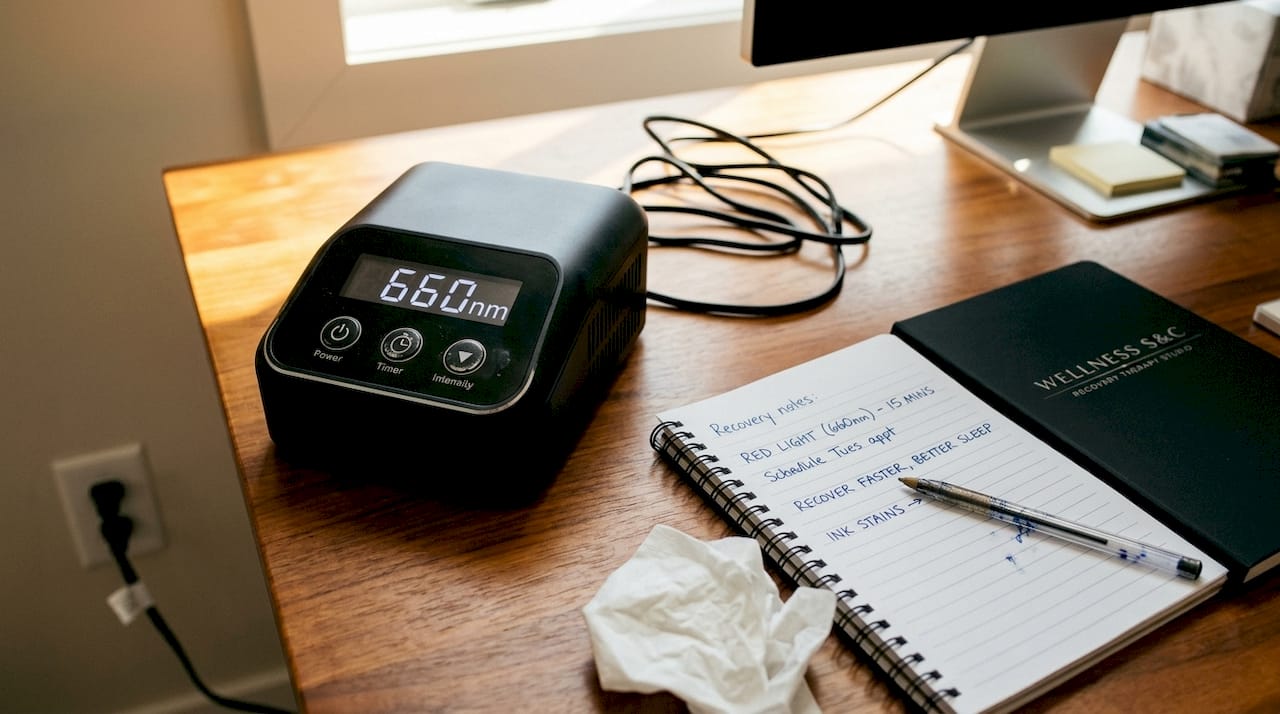
The two wavelength ranges that matter most are 630 to 660 nanometers (visible red light) and 810 to 850 nanometers (near-infrared light, invisible to the naked eye). These specific ranges are absorbed by a protein inside your mitochondria called cytochrome c oxidase. When this protein absorbs the light, it boosts the cell's production of ATP (adenosine triphosphate), which is the primary fuel your cells use to do everything from repairing tissue to reducing inflammation.
Beyond ATP, PBMT also improves local circulation, stimulates collagen production, and reduces oxidative stress at the cellular level. This is why you see benefits across so many different conditions. The underlying mechanism is cellular repair and energy production, and nearly every tissue in your body benefits from that.
One important concept to understand is the biphasic dose response. Research shows that low to moderate doses of 3 to 60 J/cm² are beneficial, while high doses above 80 to 100 J/cm² can actually be inhibitory or damaging. More is not better. This is why protocol matters as much as the device itself.
Here's a quick overview of what current evidence supports:
- Reduced inflammation and pain signaling
- Accelerated tissue repair and wound healing
- Improved muscle recovery after exercise
- Stimulated collagen and elastin production for skin health
- Enhanced nerve regeneration in some neuropathy conditions
- Reduced joint stiffness and improved range of motion
| Wavelength Range | Light Type | Primary Tissue Target | Penetration Depth |
|---|---|---|---|
| 630 to 660 nm | Visible red | Skin, superficial tissue | 1 to 2 mm |
| 810 to 850 nm | Near-infrared | Muscle, joint, nerve | Up to 4 to 5 cm |
| Below 600 nm | Visible color | Surface only | Less than 1 mm |
| Above 900 nm | Far infrared | Thermal, not photobiomodulation | Variable |
Pro Tip: Not all devices on the market use the correct wavelengths or deliver enough power. Before spending money on a device or booking sessions, verify that the technology meets FDA-cleared device standards and delivers at least 50 mW/cm² of irradiance at the treatment distance stated.
Evidence-based benefits: What does red light therapy actually heal?
Now that you understand the science, let's get clear about what red light therapy does and doesn't actually heal.
The strongest and most consistent research supports red light therapy for pain relief, musculoskeletal recovery, wound healing, and skin rejuvenation. These are not fringe claims. They're backed by randomized controlled trials (RCTs), the gold standard of medical research.
On the pain side, PBMT reduces VAS pain scores by 32% (ranging from 28% to 40%) across knee osteoarthritis, tendinopathies, and low back pain. It also improves functional scores by 18 to 25%, decreases postoperative pain by 18%, and can speed recovery by 10 days. For anyone dealing with chronic joint pain or recovering from surgery, those are meaningful numbers.
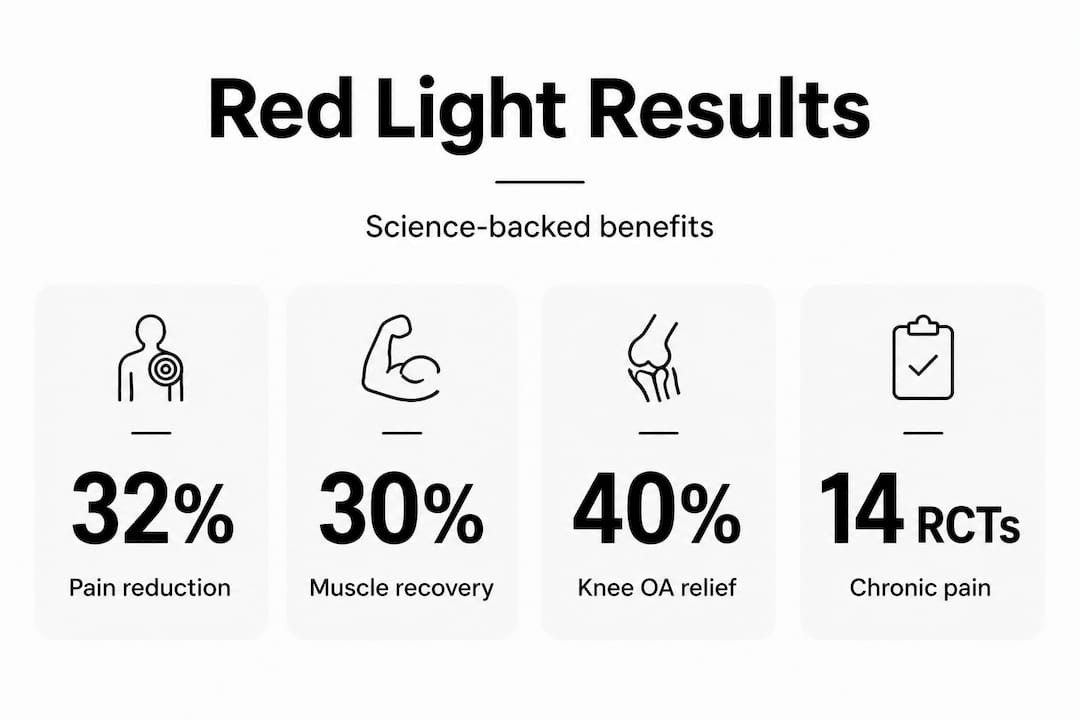
A separate analysis of 14 RCTs on chronic pain conditions including fibromyalgia and peripheral neuropathy found significant pain reduction, often exceeding a 2-point drop on the VAS scale, with very low rates of adverse events. That's a strong safety and efficacy signal.
For muscle recovery, the 30% reduction in delayed onset muscle soreness (DOMS) is particularly relevant if you train regularly. Applying PBMT before or after hard workouts can meaningfully reduce the soreness and stiffness that slow down your training progression.
| Condition | Evidence Level | Key Finding |
|---|---|---|
| Knee osteoarthritis | Strong | Up to 40% pain reduction |
| Tendinopathies | Strong | Improved function scores by 18 to 25% |
| Low back pain | Strong | Significant VAS reduction |
| Wound healing | Strong | Accelerated tissue repair |
| Oral mucositis (cancer care) | Strong | Reduced severity and duration |
| Skin rejuvenation and collagen | Strong | Measurable collagen increase |
| Hair regrowth (androgenic alopecia) | Moderate to Strong | Increased follicle density |
| DOMS and muscle recovery | Moderate to Strong | 30% reduction in soreness |
| Peripheral neuropathy | Moderate | Pain and nerve function improvement |
| Athletic performance enhancement | Weak/Inconsistent | Limited replicable evidence |
| Weight loss | Weak | No consistent clinical support |
| Sleep improvement | Weak | Preliminary and mixed results |
According to current research reviews, strong evidence also exists for accelerating wound healing and reducing oral mucositis in patients undergoing cancer treatment. Hair regrowth and skin rejuvenation also have solid research backing. Where the evidence gets thin is in weight loss and broad athletic performance claims. Those areas show promise in small studies but lack the consistency needed to make confident claims.
If you want to go deeper on pain relief and recovery research and how it compares to other modalities like infrared sauna, there's a lot of useful crossover information worth exploring.
The takeaway is simple: red light therapy works well for targeted, specific conditions. It's not a treatment for everything, but for what it does treat, the evidence is genuinely impressive.
How to use red light therapy safely and effectively
Once you know which benefits are proven, it's vital to understand how to use red light therapy safely and successfully.
Getting results from red light therapy isn't just about showing up. Dosage, device quality, and session frequency all determine whether you see real improvements or waste your time. Here's a practical step-by-step guide to getting it right.
-
Start with a clear goal. Are you treating joint pain, speeding up workout recovery, or improving your skin? Your protocol should be condition-specific because optimal dose and session length vary.
-
Choose the right device or clinic. Consumer devices vary wildly in quality. Many are underpowered and deliver far less energy than clinical models. For reliable results, look for professional red light therapy services that use equipment with verified wavelengths of 630 to 660 nm and 810 to 850 nm and irradiance above 50 mW/cm².
-
Start at a low dose. Begin with sessions of 5 to 10 minutes, 3 to 5 times per week. Doses in the range of 3 to 10 J/cm² are a safe starting point for most people. Increase duration gradually over several weeks.
-
Position matters. Distance from the device directly affects how much energy your tissue receives. Follow the manufacturer's or clinician's recommended distance. Closer isn't always better due to the biphasic response.
-
Be consistent. Most studies showing meaningful results track subjects over 4 to 12 weeks of regular use. One or two sessions won't give you the full picture.
-
Combine with movement and therapy. Research confirms that using PBMT as an adjunct to exercise and physical therapy produces the best outcomes for pain and recovery. Red light therapy works best as part of a broader plan, not as a standalone fix.
-
Check for safety flags. Avoid direct eye exposure without proper protective goggles. If you have active cancer or photosensitivity conditions, speak with your doctor first.
Pro Tip: Start slowly and pair red light therapy with complimentary recovery therapies like contrast therapy or infrared sauna for a compounding effect on circulation and inflammation reduction.
Important: Overusing red light therapy or relying on underpowered consumer devices that don't reach therapeutic dose thresholds are two of the most common reasons people don't see results. Worse, doses above 80 to 100 J/cm² can cross into inhibitory territory, working against the cellular responses you're trying to trigger. Expert consensus makes it clear that when choosing the right device or provider, protocol specificity and device quality are non-negotiable.
Limitations, misconceptions, and what most people get wrong
Even with strong clinical support, red light therapy is surrounded by misconceptions and overblown promises. Here's what to actually expect.
The wellness market has a way of taking legitimate science and stretching it far beyond what the research actually shows. Red light therapy is no exception. Understanding the real boundaries of this technology protects you from wasted money and unrealistic expectations.
Here are the top four misconceptions:
- "It works for everything." Strong clinical support exists for pain, skin, and musculoskeletal rehab. Broad wellness claims for weight loss, cognitive enhancement, or detox are not backed by the same level of evidence.
- "More sessions means faster results." The biphasic dose response means overdoing it can actually slow or reverse progress. Stick to evidence-based protocols.
- "Any red light device will work." Many consumer products don't produce therapeutic wavelengths or power levels. Without verified specs, you may not be getting any meaningful dose at all.
- "FDA clearance means it's proven to cure your condition." FDA clearance for red light devices means the device is considered safe for its intended use, not that every claim made by a manufacturer is clinically proven. Always look for condition-specific research.
A word of caution: Marketing hype significantly outpaces the actual evidence in many consumer wellness contexts. Influencers and device companies often cite real studies but apply their conclusions far beyond the original scope. Optimal protocols are condition-specific, and what works for one person may not be right for another.
The most balanced view of red light therapy is this: it's a powerful, low-risk adjunct therapy with genuinely impressive evidence in specific areas. Use it for the right reasons, with the right equipment, and it delivers. Use it as a magic fix, and you'll likely be disappointed.
Our take: What truly matters when choosing red light therapy in Las Vegas
Here's something we've observed working with wellness-focused clients across Las Vegas: the people who get the best results from red light therapy are never the ones chasing a quick fix. They're the ones who treat it as one well-chosen tool in a broader recovery plan.
The biggest mistake we see is investing in a consumer device based on an influencer recommendation, using it inconsistently, and then concluding that red light therapy doesn't work. In many of those cases, the device was simply never delivering a therapeutic dose. You wouldn't judge a medication based on taking half the prescribed amount.
What actually leads to real improvements is a combination of factors. First, you need verified equipment, not just something that glows red. Second, you need a condition-specific protocol developed with someone who understands the research, not a generic "do 20 minutes daily" instruction. Third, you need to integrate red light therapy into a broader plan that includes movement, nutrition, and complementary modalities. Our integrative recovery solutions are built around exactly that principle.
We also think there's an uncomfortable truth most wellness providers don't say out loud: red light therapy is not a replacement for medical care. It's an adjunct. The strongest outcomes in the research always involve it being used alongside exercise, physical therapy, or standard medical treatment. That's not a knock on the technology. That's just how good science reads.
Before you book sessions anywhere in Las Vegas, ask these questions: What wavelengths does your device use? What is the irradiance at treatment distance? What protocol will you recommend for my specific goal? If a provider can't answer those questions clearly, keep looking.
Experience red light therapy and complementary recovery in Las Vegas
If you're ready to try red light therapy or want to combine proven recovery solutions, here's where you can start in Las Vegas.
At Wellness Sauna & Cryotherapy, we offer Red Light Therapy Las Vegas sessions using professional-grade, FDA-cleared equipment calibrated to the therapeutic wavelengths the research actually supports. Every session is designed around your specific goals, whether that's pain relief, faster workout recovery, or skin rejuvenation. We don't guess at protocols. We follow the evidence.
You can also combine your red light sessions with Infrared Sauna Las Vegas for deeper tissue warming and circulation benefits, or add Contrast Therapy Las Vegas for a powerful one-two punch on inflammation and recovery speed. Our private rooms and premium environment make it easy to stay consistent, which is ultimately what drives results.
Frequently asked questions
Is red light therapy safe for most people?
Yes, clinical studies report a low risk of adverse events when proper protocols and FDA-cleared devices are used. A review of 14 RCTs on chronic pain conditions found very few side effects across all study participants.
How quickly will I notice results from red light therapy?
Some people feel reduced pain or notice faster recovery within 1 to 2 sessions, but research consistently tracks meaningful benefits after several weeks of regular use. Studies measuring PBMT's pain reduction typically follow subjects over 4 to 12 week treatment periods.
Are at-home red light therapy devices effective?
Home devices can produce results if they deliver the correct wavelengths and sufficient irradiance, but many consumer units are underpowered compared to clinical-grade equipment, which limits their therapeutic impact significantly.
Is red light therapy effective for weight loss?
Clinical evidence is weak and inconsistent for weight loss claims. The strongest evidence supports red light therapy for pain relief, wound healing, skin rejuvenation, and muscle recovery, not for fat reduction or metabolic changes.