
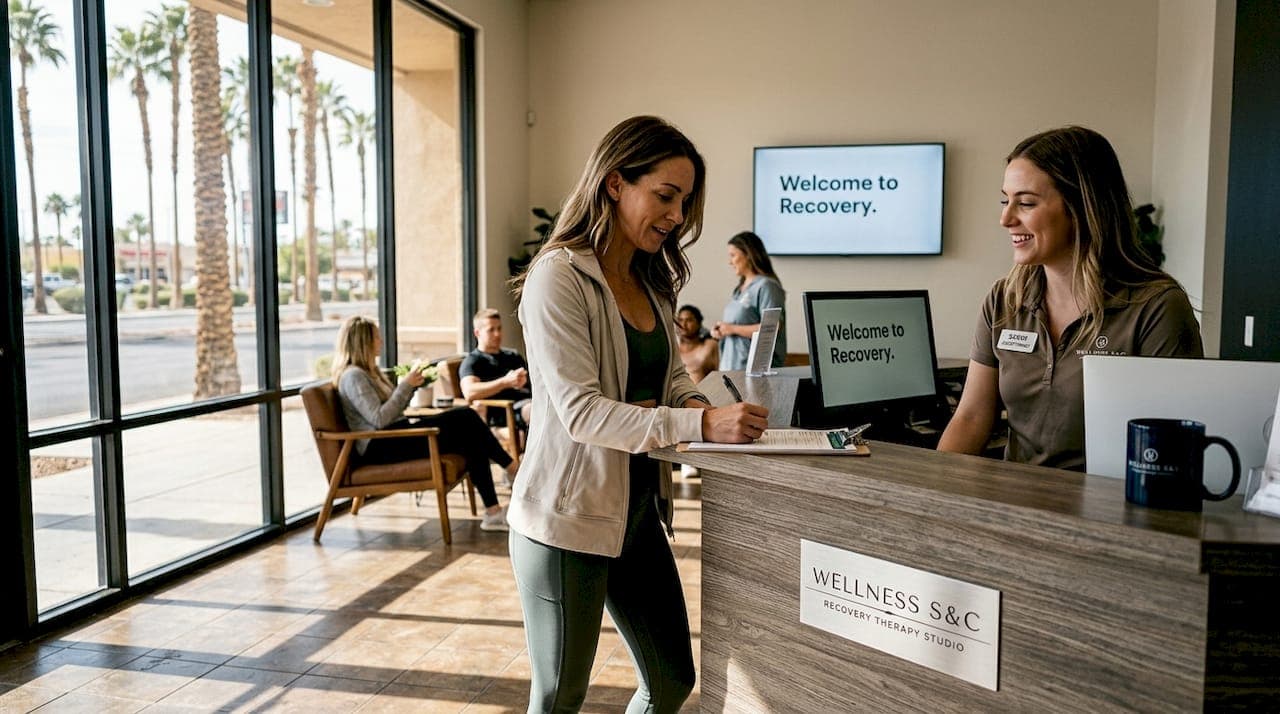
Muscle soreness, chronic stress, and slow recovery are real problems for Las Vegas locals who push hard at work, in the gym, or both. Cryotherapy has emerged as one of the most effective, science-backed tools for addressing all three. A meta-analysis of 11 RCTs confirms benefits including reduced inflammation, pain relief, mood improvement, and faster recovery. This guide walks you through exactly what cryotherapy is, how to prepare, what happens during a session, and how to get the most out of every visit. Whether you're new to cold therapy or ready to make it a regular part of your routine, this is your starting point.
Table of Contents
- What is cryotherapy and who should consider it?
- Preparing for your cryotherapy session
- Cryotherapy step by step: Session walkthrough
- Aftercare and maximizing results
- A fresh perspective: What cryotherapy gets right (and wrong)
- Experience cryotherapy and more in Las Vegas
- Frequently asked questions
Key Takeaways
| Point | Details |
|---|---|
| Science-backed recovery | Cryotherapy offers proven relief for muscle soreness and inflammation, verified by multiple studies. |
| Preparation is crucial | Proper attire, hydration, and safety checks are essential for maximizing session results. |
| Session walkthrough | The step-by-step process is fast, safe, and includes supervised cold exposure for enhanced wellness outcomes. |
| Results vary by individual | Benefits are most pronounced when cryotherapy is combined with other wellness practices and repeated regularly. |
| Las Vegas advantage | Local clinics provide access to expert-guided sessions and add-on therapies, making recovery efficient and enjoyable. |
What is cryotherapy and who should consider it?
Cryotherapy means exposing your body to extremely cold temperatures for a short, controlled period. The word itself comes from the Greek words for cold and healing. In a clinical or wellness setting, this usually means stepping into a whole-body cryotherapy chamber where temperatures drop to between -120°C and -140°C for two to three minutes. Your body responds immediately by sending blood to your core, activating a cascade of physiological responses that support recovery and reduce inflammation.
The science behind it is well-established. Research shows that cryotherapy lowers IL-1β and raises IL-10, two key inflammatory markers, which explains the pain relief and reduced swelling so many clients report. Beyond inflammation, cold exposure triggers an endorphin release that lifts mood and creates a refreshed, energized feeling post-session.
Who is cryotherapy best suited for?
- Athletes dealing with muscle soreness or post-competition fatigue
- Busy professionals managing chronic stress and tension
- Individuals with joint discomfort or mild inflammatory conditions
- Anyone seeking a natural boost in energy or mood
- People focused on skin health and long-term wellness
It is worth noting that benefits may be stronger for athletes or individuals with higher body mass, though many non-athletes report meaningful improvements after just a few sessions.
Here is a quick look at what cryotherapy targets and the typical outcomes clients experience:
| Goal | What cryotherapy does | Typical outcome |
|---|---|---|
| Muscle recovery | Reduces inflammation and soreness | Faster return to activity |
| Stress relief | Triggers endorphin and noradrenaline release | Calmer mood, mental clarity |
| Joint pain | Lowers inflammatory markers | Reduced stiffness and discomfort |
| Skin health | Stimulates circulation and collagen | Improved tone and texture |
| Energy levels | Activates the nervous system | Increased alertness post-session |
If any of these outcomes align with what you're looking for, cryotherapy Las Vegas is a genuinely practical option to explore.
Preparing for your cryotherapy session
Once you know cryotherapy fits your needs, a little preparation goes a long way toward making your session safe and effective. First, a quick note on safety. Cryotherapy is not recommended for individuals with circulation disorders, heart conditions, Raynaud's disease, severe high blood pressure, or pregnancy. Your provider will walk you through an informed consent process before your first session, so be honest about your health history.
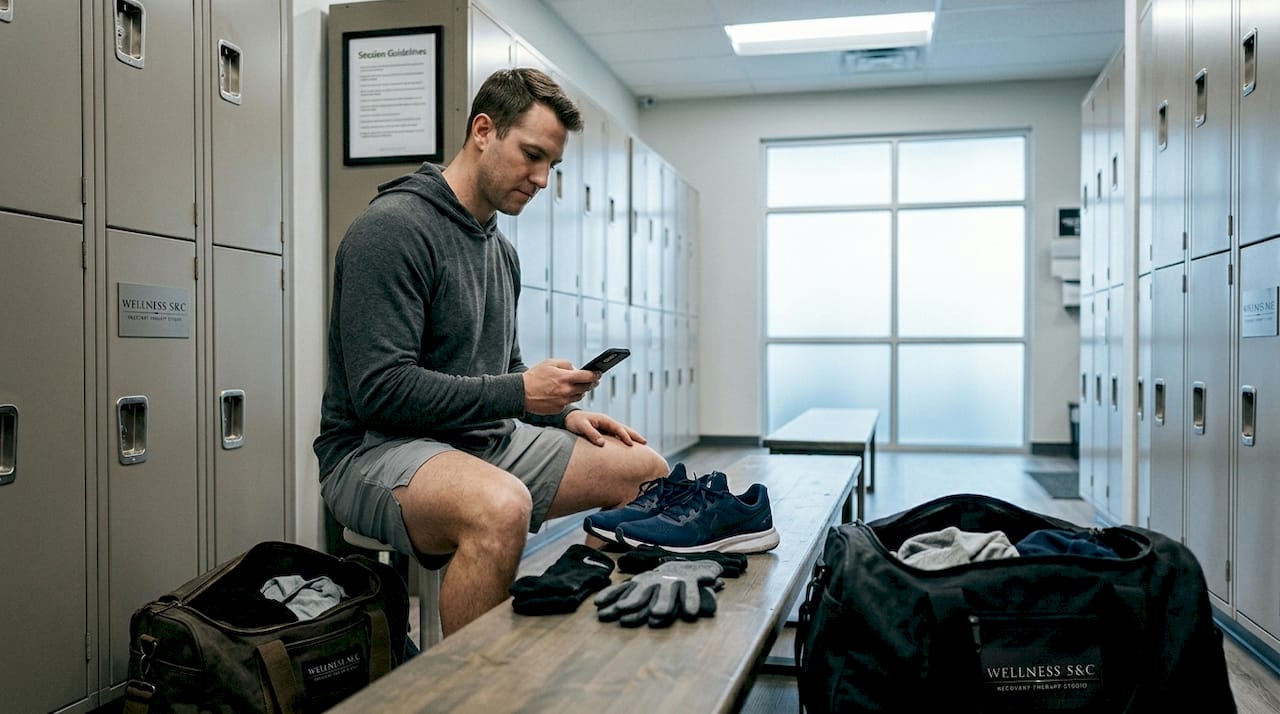
Mood and stress benefits are linked to endorphin and noradrenaline release triggered by cold exposure, so arriving calm and well-hydrated helps your body respond optimally.
Before your session, keep these in mind:
- Drink water in the hours leading up to your appointment
- Avoid applying lotions, oils, or perfumes to your skin beforehand
- Do not consume alcohol before a session
- Wear or bring dry athletic attire, including socks, shoes, and gloves
- Remove all jewelry and metal accessories
The difference between whole-body and localized cryotherapy is also worth understanding before you book:
| Feature | Whole-body cryotherapy | Localized cryotherapy |
|---|---|---|
| Area treated | Full body | Targeted muscle or joint |
| Temperature range | -120°C to -140°C | -20°C to -30°C |
| Session length | 2-3 minutes | 5-10 minutes |
| Best for | Recovery, mood, systemic benefits | Specific injuries or pain points |
| Equipment used | Walk-in chamber | Handheld or targeted device |
You can review service details to decide which format suits your goals, or check available cryotherapy packages to plan your visits.
Pro Tip: If it's your first session, go with whole-body cryotherapy. The systemic response gives you a full picture of how your body reacts to cold exposure, and most clients find the energy boost and mood lift to be the most motivating part of their first visit.
Cryotherapy step by step: Session walkthrough
With preparation complete, you'll proceed to the actual session. Here is the full sequence of what happens from the moment you arrive.
- Check-in and health screening. You'll complete or confirm your health intake form. Staff will ask about any new medications, recent injuries, or changes to your health since your last visit.
- Attire check. You change into dry athletic wear. Socks, gloves, and footwear are required to protect your extremities. No moisture on the skin or clothing.
- Entry into the chamber. The chamber is pre-cooled. You step in, and the door closes. Your head remains above the chamber opening at all times in a whole-body unit.
- The session begins. Temperature drops quickly to the target range. The session runs for two to three minutes. A staff member stays close and communicates with you throughout.
- Sensations you'll feel. Intense cold hits fast, but it is a dry cold, not wet. Most clients describe it as sharp and bracing rather than painful. Light movement inside the chamber keeps circulation active.
- Exit and immediate aftercare. You step out feeling a rush of warmth as blood returns to the surface. Most clients feel alert, lighter, and noticeably less tense within minutes.
"The first minute feels intense, but by the time you exit, you feel restored. That contrast is exactly what drives the recovery response your body needs."
The numbers back this up. Research shows 33% less muscle soreness and up to 20% faster recovery compared to passive rest. That is a meaningful difference for anyone training consistently or managing physical demands at work.
If you want to build on this further, contrast therapy options pairing cold and heat can amplify the results. Some clients also incorporate a cold plunge Las Vegas session as a complementary modality.
Pro Tip: Keep your breathing steady and slow during the session. Focusing on your breath keeps your nervous system calm and helps you stay in the chamber longer, which maximizes the physiological benefit.
Aftercare and maximizing results
Post-session care is just as important as the session itself. How you treat your body in the hours following cryotherapy directly affects how much benefit you carry into the next day.
Recommended aftercare steps:
- Rehydrate with water or an electrolyte drink within 30 minutes
- Do light movement or a short walk to maintain blood flow
- Eat a balanced meal with protein and complex carbohydrates within two hours
- Avoid sitting still for long periods right after your session
- Track your soreness level, mood, and sleep quality to monitor your progress
Beyond soreness relief, research confirms improved sleep and skin health as real, measurable outcomes for regular cryotherapy users. Better sleep alone is a game-changer for recovery, focus, and mood.
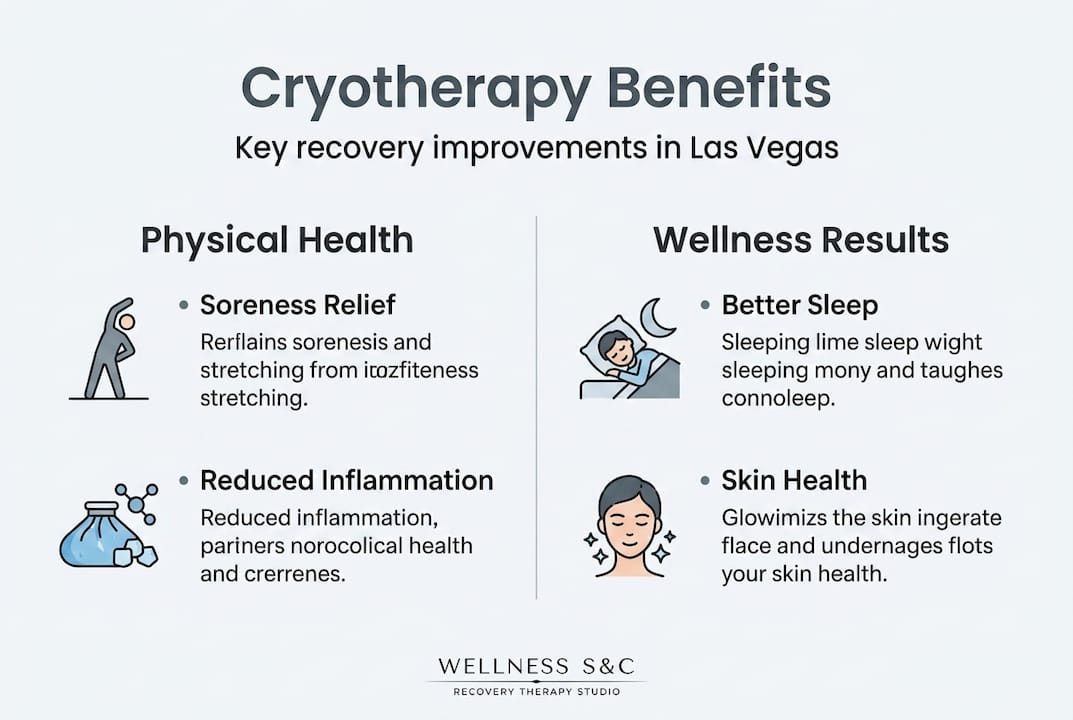
Statistic to know: Clients who combine cryotherapy with complementary therapies report compounding improvements in energy, sleep quality, and recovery speed compared to those using cryotherapy alone.
It is also worth being realistic. Evidence does vary by individual, and results are not identical for everyone. That is not a reason to skip it. It is a reason to track your own response and adjust your approach based on what your body tells you.
For scheduling, most clients see consistent improvement after three to five sessions. Once or twice weekly is a common rhythm for people managing ongoing soreness or stress. Spacing sessions at least 24 hours apart gives your body time to complete its recovery cycle.
Combining cryotherapy with red light therapy benefits can further support cellular recovery and skin health. Adding dry float therapy on alternating days gives your nervous system deep rest between more stimulating treatments. You can explore more combinations and tips on the recovery tips blog.
A fresh perspective: What cryotherapy gets right (and wrong)
Here is an honest take. Cryotherapy works. But it works best when you treat it as one tool in a broader recovery strategy, not the only one. Some clients come in expecting a single session to fix months of overtraining or chronic stress. That is not realistic, and overpromising does everyone a disservice.
The research is also honest about its limits. Some evidence is low-to-moderate quality and not always clinically significant for pain or swelling on its own. That matters. But what the studies cannot always capture is what motivated, consistent clients actually experience when they combine cryotherapy with smart nutrition, proper sleep, and complementary therapies.
Las Vegas clients in particular tend to see outsized results. The dry desert climate means skin responds well to cold stimulation, and the city's active lifestyle creates a strong demand for rapid recovery. Clients who pair cryotherapy with sauna, red light therapy, or cold plunge consistently report better outcomes than those using cold therapy alone. The insights shared on wellness insights reflect exactly this kind of real-world, layered approach. Use the science as your baseline, then let your own results guide you forward.
Experience cryotherapy and more in Las Vegas
At Wellness Sauna & Cryotherapy, we make it easy to start your recovery journey with confidence. Our facility offers premium Las Vegas cryotherapy sessions in a clean, private, and professionally managed environment. Every session is guided by trained staff who prioritize your comfort and safety from check-in to exit. You can also pair your cryotherapy visit with infrared sauna Las Vegas sessions, red light therapy, or cold plunge for a fully layered recovery experience. Browse our wellness packages to find the combination that fits your goals and schedule. Book online or give us a call to get started today.
Frequently asked questions
How cold does cryotherapy get?
Whole-body cryotherapy chambers typically reach between -120°C and -140°C for two to three minutes, triggering the body's natural physiological recovery response.
Is cryotherapy safe for everyone?
Cryotherapy is generally safe for healthy adults, but safety checks are standard before every session. It is not recommended for those with circulation issues, heart conditions, or pregnancy.
How many sessions do I need to see results?
Noticeable benefits often appear after three to five sessions, though even one session can reduce soreness and stress. Research supports 33% less muscle soreness with consistent use.
What should I wear during cryotherapy?
Wear dry athletic attire with socks, shoes, and gloves to protect your extremities. No lotions, oils, or metal accessories should be on your body before entering the chamber.
Are the benefits permanent?
Cryotherapy effects like reduced soreness and better mood are short-term. Benefits may vary by individual, and regular sessions are the best way to maintain lasting results.