
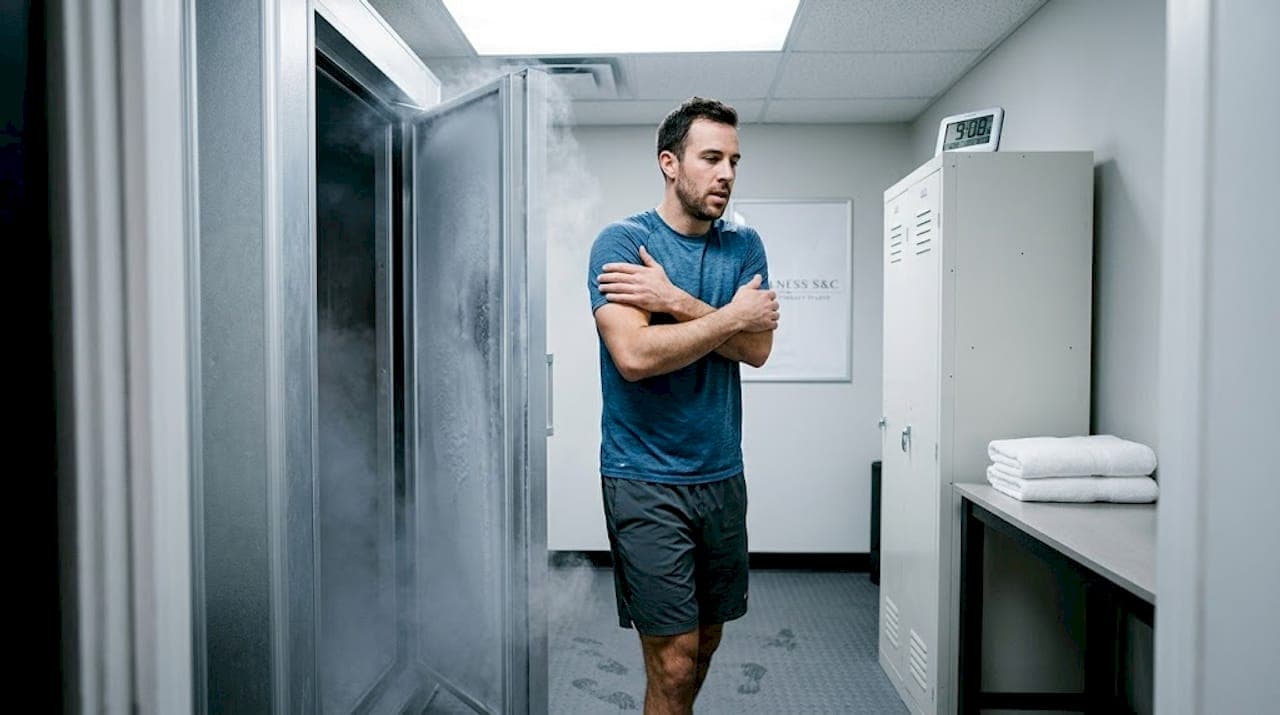
If you've ever pushed through a brutal training session and reached for an ice pack, you already understand the instinct behind cryotherapy. But what most athletes and wellness seekers don't realize is that modern cryotherapy goes far beyond a bag of ice on a sore knee. It's a structured, science-backed approach to recovery that triggers specific physiological responses in your body, and the research behind it is growing fast. This article breaks down exactly what cryotherapy is, how it works, how it compares to cold water immersion, and what you need to know to use it safely and effectively.
Table of Contents
- What is cryotherapy? Definitions, origins, and methods
- How does cryotherapy work? Science and key body effects
- Cryotherapy vs. cold water immersion: which is better for recovery?
- Is cryotherapy safe? Risks, contraindications, and best practices
- The truth about cryotherapy: what most guides won't tell you
- Experience cryotherapy and advanced recovery solutions in Las Vegas
- Frequently asked questions
Key Takeaways
| Point | Details |
|---|---|
| Cryotherapy basics | Cryotherapy uses extreme cold to support recovery and reduce soreness. |
| Science-backed benefits | Whole Body Cryotherapy lowers inflammation markers and gives short-term hormone boosts post-exercise. |
| WBC vs. CWI | Cold water immersion is better for DOMS relief at 24 hours, while WBC offers convenience and quick systemic effects. |
| Safety first | Proper screening, supervision, and awareness of risks are vital for anyone considering cryotherapy. |
| Part of a bigger plan | Best recovery results come by combining cryotherapy with proven methods and a comprehensive approach. |
What is cryotherapy? Definitions, origins, and methods
Cryotherapy literally means "cold therapy." The term covers any treatment that uses extremely low temperatures to promote healing, reduce inflammation, or support recovery. While cold therapy has been used in medicine for centuries, modern whole body cryotherapy (WBC) was developed in Japan in the late 1970s by Dr. Toshima Yamauchi to treat rheumatoid arthritis. Since then, it has expanded into sports medicine and general wellness worldwide.
Today, two methods dominate the conversation for athletes and health-focused individuals:
- Whole Body Cryotherapy (WBC): You stand in a cryotherapy chamber cooled by liquid nitrogen or refrigerated air, typically between -200°F and -256°F, for two to four minutes. Your skin surface temperature drops rapidly while your core body temperature stays stable.
- Cold Water Immersion (CWI): You submerge your body, usually up to the waist or chest, in cold water between 50°F and 59°F for ten to twenty minutes. This is the classic "ice bath" approach used by athletes for decades.
Both methods aim to reduce inflammation and speed up recovery, but they work through slightly different mechanisms and produce different outcomes. The cryotherapy basics behind WBC are particularly interesting because the cold is dry and extremely intense, which means the body responds faster and more systemically than with water immersion.
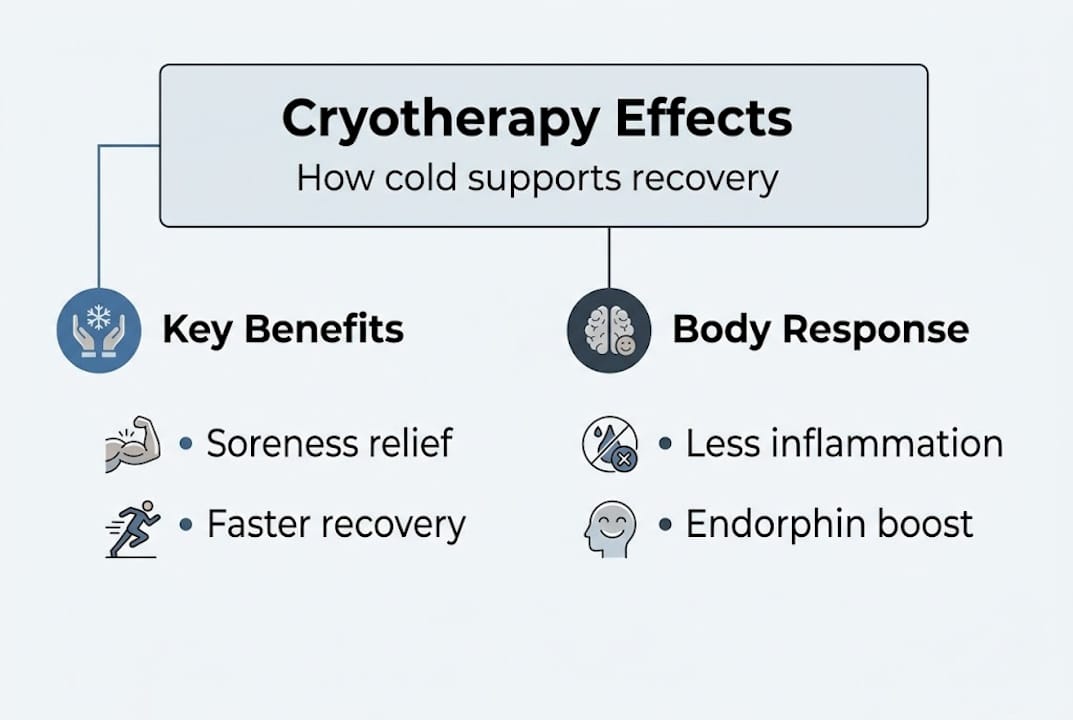
Research confirms that WBC reduces proinflammatory IL-1β and increases anti-inflammatory IL-10, which are key cytokines involved in the body's recovery process. This cytokine modulation is one reason WBC has attracted serious attention from sports scientists.
| Feature | Whole Body Cryotherapy (WBC) | Cold Water Immersion (CWI) |
|---|---|---|
| Temperature | -200°F to -256°F | 50°F to 59°F |
| Session length | 2 to 4 minutes | 10 to 20 minutes |
| Coverage | Full body (dry cold) | Partial or full body (wet cold) |
| Cost | Higher (facility-based) | Lower (DIY possible) |
| Systemic effect | Strong | Moderate |
For those who want a more accessible entry point into cold therapy, cold plunge therapy offers a guided CWI experience with professional support and temperature control.

How does cryotherapy work? Science and key body effects
With a grasp on the types of cryotherapy, let's see what happens inside your body during these chilling sessions. The physiological response is more layered than most people expect, and understanding it helps you use cryotherapy more strategically.
Here's the sequence your body goes through during a WBC session:
- Vasoconstriction: Blood vessels near the skin surface narrow rapidly in response to the extreme cold, redirecting blood toward your vital organs.
- Metabolic slowdown: Tissue metabolism slows, reducing the demand for oxygen in peripheral tissues and limiting inflammation signals.
- Hormonal response: Your body releases norepinephrine, a stress hormone that also has powerful anti-inflammatory properties.
- Vasodilation: After the session ends, blood vessels reopen and nutrient-rich blood floods back into muscle tissue.
- Cytokine shift: The balance of inflammatory proteins in your bloodstream shifts, with research showing that WBC reduces inflammation through measurable cytokine modulation.
One of the more surprising findings involves testosterone. Single WBC sessions boost testosterone for up to 24 hours after exercise. This short-term hormonal spike may support muscle repair and recovery in the immediate post-training window, though long-term hormonal effects are not yet well established.
Key stat: Studies show WBC can significantly reduce IL-1β (a pro-inflammatory marker) while elevating IL-10 (an anti-inflammatory marker), creating a measurable shift in your body's recovery environment within hours of a session.
For athletes looking to stack recovery modalities, pairing cryotherapy with red light therapy benefits can support both cellular repair and inflammation control through complementary mechanisms.
Pro Tip: Time your cryotherapy session within 30 to 60 minutes after training to take advantage of the acute anti-inflammatory window and the short-term testosterone response.
Cryotherapy vs. cold water immersion: which is better for recovery?
Understanding how cryotherapy works sets the stage for a comparison that matters most to athletes and those seeking results: how does it stack up against traditional cold exposure?
The honest answer is that both methods have real value, and the best choice depends on your specific goals. Recent research provides some useful clarity. CWI outperforms WBC for DOMS relief at 24 hours post-exercise, while WBC shows an edge for short-term jump performance recovery. In other words, if your primary goal is reducing muscle soreness the next day, a cold plunge may serve you better. If you want to maintain explosive power output between training sessions, WBC has a measurable advantage.
Here's a side-by-side breakdown:
| Recovery metric | WBC | CWI |
|---|---|---|
| DOMS relief (24h) | Moderate | Strong |
| Jump performance recovery | Strong | Moderate |
| Pain relief | Good | Very good |
| Session time | 2 to 4 minutes | 10 to 20 minutes |
| Accessibility | Facility required | DIY or facility |
| Cost per session | Higher | Lower |
Key considerations when choosing between the two:
- Choose WBC when you need a fast, time-efficient session and want systemic effects across your entire body.
- Choose CWI when reducing localized soreness is the priority, especially after leg-heavy training.
- Combine both over a training week to address different recovery needs at different stages.
Pro Tip: If you compete or train multiple days in a row, WBC on training days and CWI on rest days can create a complementary rhythm that supports both performance and soreness management.
For athletes who want to experience the benefits of both approaches, contrast therapy options that alternate heat and cold exposure offer another powerful recovery strategy. You can also explore cryotherapy package options to find a plan that fits your training schedule and budget.
Is cryotherapy safe? Risks, contraindications, and best practices
No matter the benefits, your safety comes first. Let's clear up what you need to know about cryotherapy's real-world risks and how to use it wisely.
Cryotherapy is generally safe when performed correctly under professional supervision. However, real risks exist and should not be dismissed. Risks include frostbite, burns, cardiovascular stress, and asphyxiation in nitrogen-based chambers if safety protocols are not followed. These risks are rare in reputable facilities but are serious enough to warrant careful screening before your first session.
Who should avoid cryotherapy:
- People with uncontrolled high blood pressure or serious heart conditions
- Those with Raynaud's disease or other cold sensitivity disorders
- Individuals with claustrophobia (especially in enclosed WBC chambers)
- Pregnant women
- Anyone with open wounds, skin infections, or nerve damage in the treatment area
- People with severe anemia or circulation disorders
"Proper screening, professional supervision, and adherence to established safety protocols are essential before using cryotherapy, particularly for individuals with underlying health conditions." — Expert consensus from current rehabilitation science literature
Best practices for safe cryotherapy use:
- Always disclose your full health history before your first session
- Keep skin completely dry before entering a WBC chamber
- Never exceed the recommended session time
- Wear protective gear (gloves, socks, ear coverings) during WBC
- Have a trained professional present throughout the session
- Stop immediately if you feel pain, dizziness, or discomfort
The FDA has not approved cryotherapy for the treatment of specific medical conditions, and experts call for more rigorous clinical trials before broad therapeutic claims can be made. Working with a professional cryotherapy supervision team ensures you get the benefits while minimizing risk.
The truth about cryotherapy: what most guides won't tell you
Now that you know the benefits and risks, here's a perspective not enough mainstream guides address. Cryotherapy is genuinely promising. The evidence for reduced inflammation, faster soreness recovery, and short-term hormonal benefits is real. But it's not a magic solution, and treating it as one sets you up for disappointment.
The literature is mixed on performance enhancement, with strong signals for soreness relief but limited evidence that cryotherapy alone produces superior long-term recovery compared to well-structured sleep, nutrition, and active recovery. The athletes who get the most out of cryotherapy are the ones who treat it as one tool in a broader recovery system, not a replacement for the fundamentals.
We've seen this firsthand. Clients who combine cryotherapy with complementary modalities, proper nutrition, and consistent sleep consistently report better results than those chasing cold sessions alone. The science supports a layered approach. Explore our recovery strategy blogs for guidance on building a complete, integrated recovery plan that actually moves the needle.
Set realistic expectations, work with qualified professionals, and let cryotherapy do what it does best: support your recovery as part of a smarter, more complete wellness strategy.
Experience cryotherapy and advanced recovery solutions in Las Vegas
If you're ready to take the next step toward optimal recovery, Wellness Las Vegas offers tailored cryotherapy and contrast therapy options designed for athletes and health-focused individuals who want real results. Our facility provides access to Cryotherapy Las Vegas sessions in a clean, professionally supervised environment where your safety and comfort are the priority. Pair your cold therapy with contrast therapy sessions that combine heat and cold for a more complete recovery experience. Browse our recovery package options to find a plan that fits your goals and schedule. Book your session today and feel the difference.
Frequently asked questions
How often should you use cryotherapy for best results?
Most experts recommend 2 to 3 sessions per week for athletic recovery, though the right frequency depends on your training load and health goals. WBC offers time-efficient recovery post-training under medical supervision, making it practical to integrate into a regular schedule.
Can cryotherapy help with chronic pain or only athletic recovery?
The evidence is strongest for exercise-related recovery and acute soreness relief. Some individuals with chronic pain report benefits, but the literature is mixed on wider clinical effectiveness, and more research is needed before specific clinical recommendations can be made.
Who should avoid cryotherapy?
Anyone with uncontrolled high blood pressure, Raynaud's disease, serious heart conditions, or claustrophobia should avoid cryotherapy. Contraindications include hypertension, Raynaud's, claustrophobia, and cardiac issues, and a thorough health screening is essential before your first session.
Does cryotherapy help athletic performance directly?
Some studies show a temporary boost in testosterone and reduced soreness after WBC, but consistent strength or power improvements are not well supported by current evidence. A single WBC session boosts testosterone without producing lasting performance gains on its own.
Recommended
- Cryotherapy Las Vegas – Wellness Las Vegas
- Contrast Therapy Las Vegas | Cold Plunge & Sauna Recovery – Wellness Las Vegas
- Cold Plunge Las Vegas – Wellness Las Vegas
- Wellness Las Vegas
- Does ice help injuries? What science says about sports recovery
- How to Enhance Sports Recovery Naturally for Athletes