
Persistent muscle soreness after hard training is one of the most frustrating barriers to consistent performance. You train hard, you sleep, and you still wake up stiff and slow. Cold therapy has become one of the most talked-about recovery tools in sports science, but the gap between hype and reality is wide. This guide gives you the evidence-based framework to use cold therapy safely and effectively, whether you're setting up at home or walking into a professional facility. We cover the science, the equipment, the exact protocols, and the timing rules that separate results from wasted effort.
Table of Contents
- What is cold therapy and how does it work?
- Required equipment and safety checklist
- Step-by-step guide: Cold water immersion (CWI) protocol
- When to use cold therapy—and when to avoid it
- Monitoring results and troubleshooting common issues
- Why most athletes get cold therapy wrong—and what actually works
- Revolutionize your recovery with Wellness Las Vegas
- Frequently asked questions
Key Takeaways
| Point | Details |
|---|---|
| Preparation matters | Having the right equipment and safety setup is essential before starting cold therapy. |
| Follow a proven protocol | Use scientifically backed timings and temperatures for optimal muscle recovery benefits. |
| Timing is critical | Avoid cold therapy immediately after resistance training if muscle growth is your goal. |
| Monitor and adapt | Assess your body's response and adjust your protocol to maximize benefits and minimize risks. |
| Professional guidance helps | Seek expert supervision or advice, especially if you are new or have health conditions. |
What is cold therapy and how does it work?
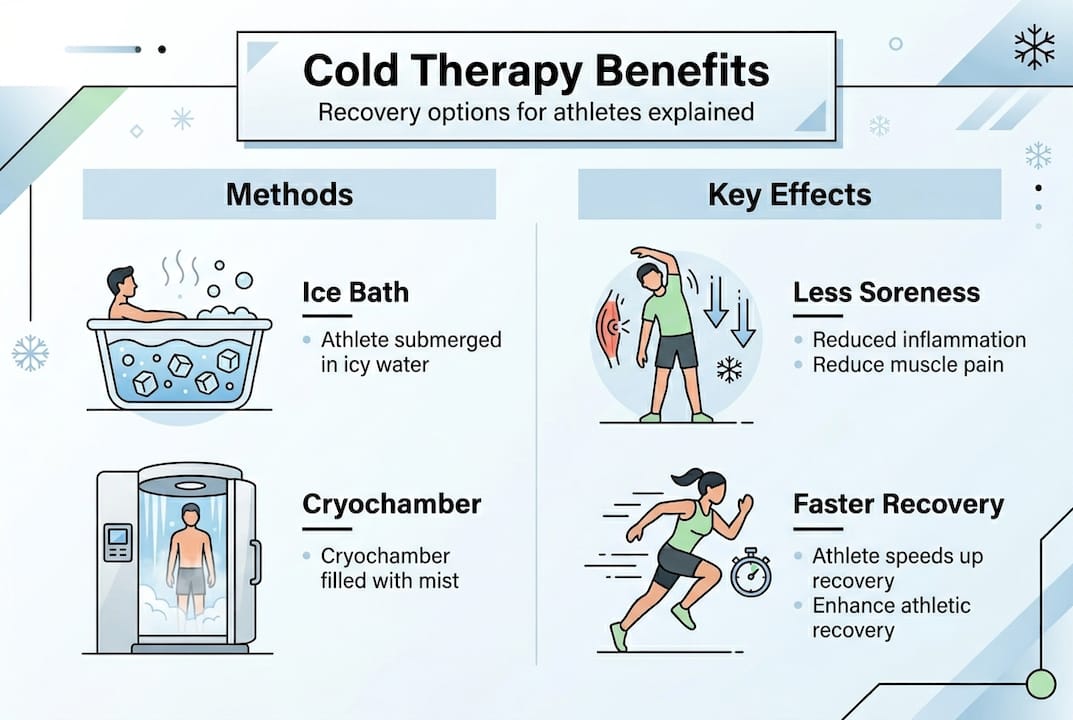
Cold therapy is the deliberate application of cold temperatures to the body to support recovery, reduce inflammation, and ease soreness. It covers several modalities, each with different delivery methods and use cases.
Common cold therapy modalities:
- Cold water immersion (CWI): Submerging the body (fully or partially) in cold water, typically in a tub or tank
- Whole-body cryotherapy (WBC): Standing in a cryo chamber cooled to extreme temperatures (around -110°C to -140°C) for 2-4 minutes
- Ice packs: Localized application of ice or frozen gel packs to specific muscle groups
- Contrast therapy: Alternating between cold and heat exposure to drive circulation and accelerate flushing of metabolic waste
When cold is applied to the body, tissue temperature drops, blood vessels constrict (vasoconstriction), nerve conduction slows, and inflammation signals are dampened. After you exit the cold, blood rushes back in (vasodilation), helping clear metabolic byproducts. This cycle is what makes contrast therapy options particularly effective for active recovery.
CWI reduces DOMS (delayed onset muscle soreness, the stiffness felt 24-48 hours after exercise) and lowers creatine kinase (CK) levels, a marker of muscle damage, while improving perceived recovery. That last point matters: some of the benefit may involve a placebo effect, meaning perceived improvement does not always translate into measurable functional gains. Still, the subjective recovery advantage is real and well-documented.
For a deeper look at what to expect from each option, the cryotherapy guide and cold plunge basics at Wellness Las Vegas break down each service in detail. You can also review broader cold therapy research to get an honest picture of what the evidence supports.
| Modality | Efficacy for DOMS | Accessibility | Best use case |
|---|---|---|---|
| Cold water immersion | High | Moderate (home or clinic) | Post-training, multi-day events |
| Whole-body cryotherapy | Moderate | Low (clinic only) | Quick recovery between events |
| Ice packs | Low to moderate | High (home) | Localized injury or spot treatment |
| Contrast therapy | High | Moderate (clinic preferred) | Full-body recovery and circulation |
Required equipment and safety checklist
Understanding what cold therapy is, the next step is ensuring you have the right tools and prioritize safety.
Essential equipment for a home session:
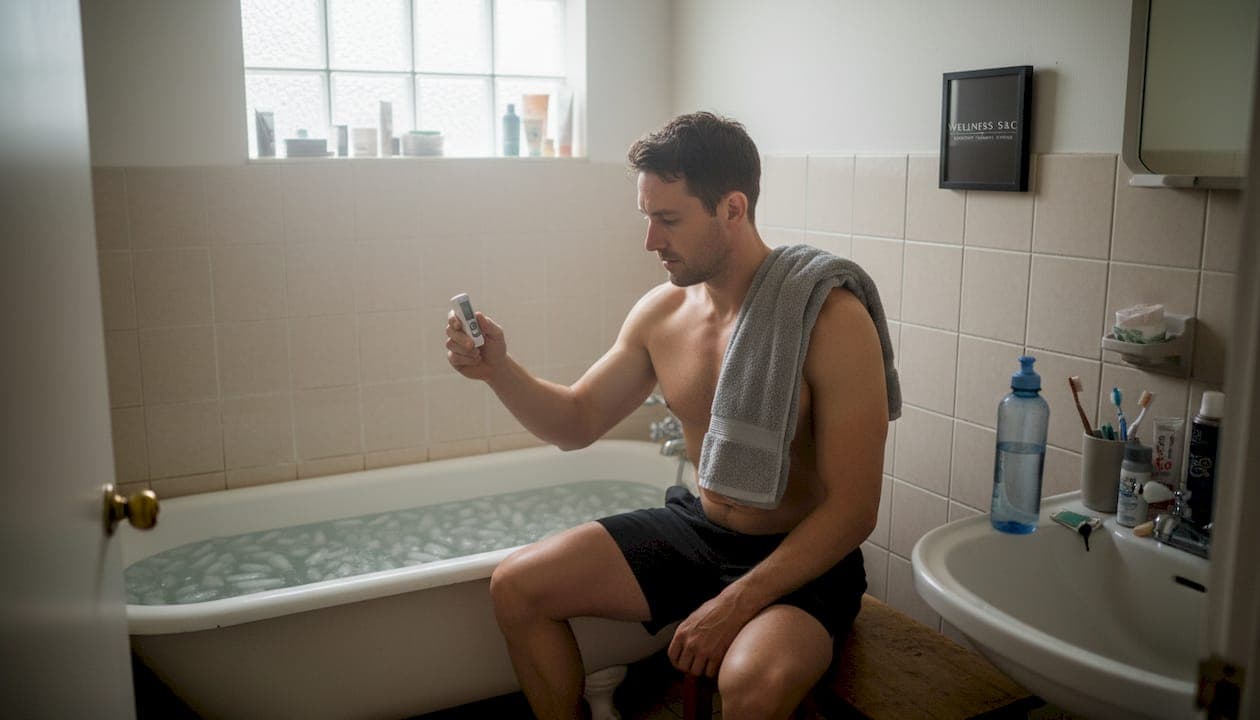
- Cold tub or large bin (big enough to submerge legs and hips at minimum)
- Accurate thermometer (digital preferred for precision)
- Timer or stopwatch
- Dry towels and a warm robe or blanket for post-session
- Warm clothing for immediate recovery phase
For beginners, having someone nearby during your first few sessions adds an important layer of safety. You may not anticipate how your body reacts to sustained cold exposure.
Before every session, run through this pre-check. Do you have any open wounds, active skin infections, or signs of inflammation that go beyond normal training soreness? If yes, skip that session. Risks include hypothermia, frostbite, and serious contraindications for those with cardiac or pulmonary disease, Raynaud's syndrome, hypertension, pregnancy, or active infections.
Safety first: Clinical research is clear that cold therapy is not universally safe. Anyone with cardiovascular disease, uncontrolled hypertension (above 160/100 mmHg), Raynaud's syndrome, pulmonary conditions, pregnancy, or active infections should avoid cold immersion without explicit clearance from a physician.
| Factor | Home setup | Professional clinic |
|---|---|---|
| Cost | Low to moderate | Moderate per session |
| Supervision | None | Trained staff |
| Temperature precision | Variable | Controlled |
| Safety monitoring | Self-managed | Professional oversight |
| Equipment quality | Basic | Premium |
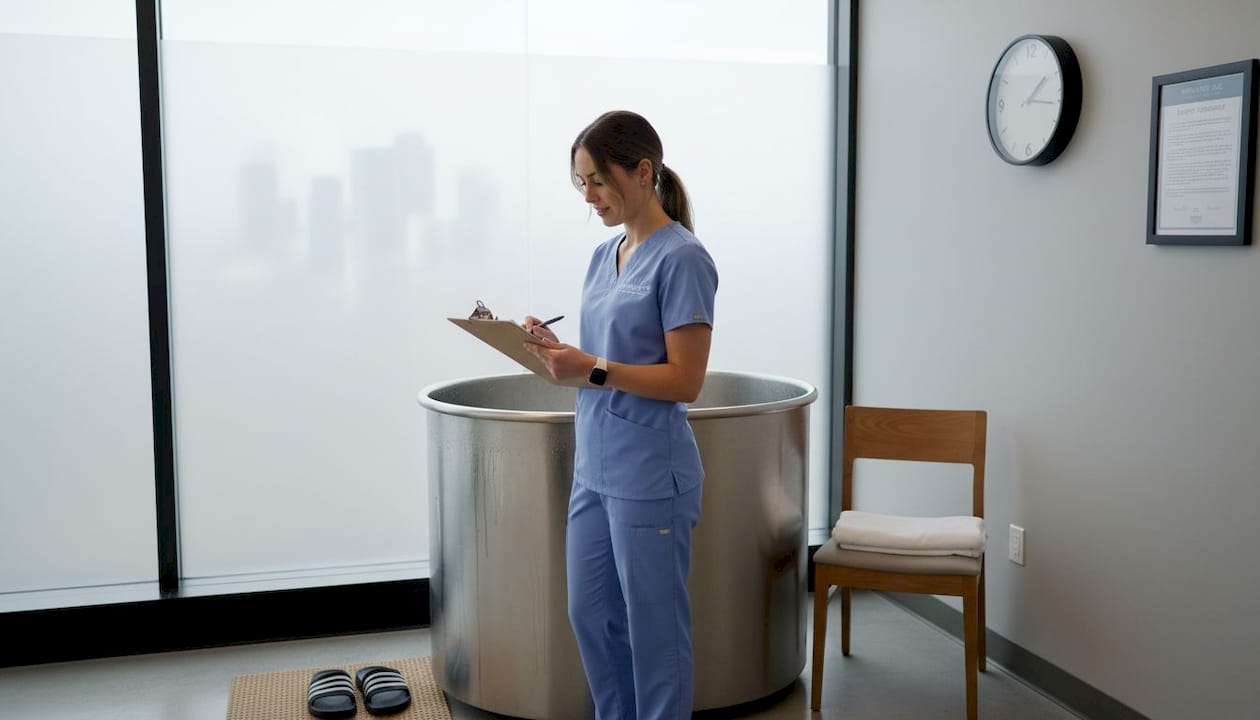
If you have any of the above conditions or are new to cold therapy, exploring professional services where trained staff can guide and monitor your session is the smarter route.
Pro Tip: Start with water temperatures around 15°C (59°F) and sessions under 5 minutes for your first two weeks. Increase intensity gradually as your body adapts. Jumping straight into 5°C for 15 minutes as a beginner is both uncomfortable and potentially dangerous.
Step-by-step guide: Cold water immersion (CWI) protocol
Once properly equipped and cleared for safety, you're ready to begin. Follow this step-by-step CWI protocol.
- Prepare your setup: Fill the tub with cold water and verify the temperature using your thermometer. Aim for 10-15°C (50-59°F) for general recovery. For targeting muscle damage markers specifically, optimal protocols recommend 5-10°C; for soreness reduction, 11-15°C is effective.
- Pre-session movement: Spend 3-5 minutes doing light movement (walking, arm circles) before entering. This is not about warming up to avoid cold; it's about getting blood circulating so the contrast effect is stronger.
- Enter slowly: Lower yourself into the water gradually, starting with your feet and legs. Do not jump in. Control your breathing as you submerge.
- Maintain the immersion: Aim for 10 to 15 minutes. Keep still or do minimal movement. Focus on calm, controlled breathing. Check in with your body every few minutes.
- Monitor for warning signs: If you experience intense shivering, numbness that does not subside, dizziness, or chest tightness, exit immediately. These are signs your body is under excessive stress.
- Exit and warm up: Stand up slowly to avoid a blood pressure drop. Towel dry immediately, dress warmly, and allow your body to return to normal temperature naturally over 10-15 minutes. Do not use a hot shower immediately.
- Hydrate: Drink water after your session. Cold exposure can mask dehydration signals.
Partial immersion (legs and hips only) produces similar benefits to full-body immersion for lower-body recovery, so don't feel you need to submerge your entire torso if it's uncomfortable.
Pro Tip: Prepare your warm recovery gear before you get in. The transition from cold to warmth should be smooth and immediate. Cold is the stimulus; warmth after is part of the protocol, not an afterthought.
Important: Avoid cold water immersion immediately after heavy resistance or strength training if building muscle is your primary goal. Cold applied right after strength work can blunt muscle protein synthesis (MPS), reducing the adaptation you trained for.
When to use cold therapy—and when to avoid it
Knowing how to carry out cold immersion is essential, but understanding timing and limitations maximizes its benefits and avoids setbacks.
Best times to use cold therapy:
- After practice sessions, especially high-volume or high-intensity training days
- Following competition, particularly contact sports or events with heavy eccentric loading
- During multi-day endurance events where rapid recovery between days is critical
- When soreness is the primary complaint and performance in 24-48 hours matters
When to skip cold therapy:
- Immediately after resistance or strength training sessions focused on hypertrophy (muscle growth). Avoid immediate post-strength cold use, as it inhibits explosive power adaptation and blunts MPS.
- When explosive power development is a training priority in the current cycle
- When you have active skin infections, open wounds, or the contraindications listed earlier
Who should not use cold therapy:
- Children and adolescents without professional supervision
- Pregnant individuals
- People with hypertension above 160/100 mmHg
- Those with Raynaud's syndrome or cold urticaria
- Anyone with unmanaged cardiovascular or pulmonary conditions
Cold water immersion can outperform rest for short-term soreness, but it is not a replacement for comprehensive recovery. Evidence shows CWI is superior to WBC for short-term DOMS reduction, yet neither shows superior functional recovery compared to a sham condition in controlled trials.
For athletes who want to support recovery without limiting adaptation, pairing cold therapy with complementary light therapy like red light therapy can support tissue repair without the anti-adaptive effects of cold.
Monitoring results and troubleshooting common issues
To get the full benefit from cold therapy, it's crucial to assess your results and adjust as you go based on your body's feedback.
Track these four markers after each session:
- Subjective soreness: Rate your soreness on a simple 1-10 scale before and 24 hours after each session.
- Perceived recovery: Note how recovered you feel for the next training session. Is your readiness improving over time?
- Mood and sleep: Cold exposure has a mild effect on mood through norepinephrine release. Track whether you sleep better and feel mentally sharper.
- Skin and sensation: Check that no skin areas show prolonged redness, unusual discoloration, or numbness that lingers more than 30 minutes post-session.
Common cold therapy mistakes to avoid:
- Overexposure: Sessions longer than 15 minutes dramatically increase hypothermia risk with no additional recovery benefit
- Skipping the warm-up: Entering cold water without any prior movement makes the experience harder and reduces the contrast effect
- Ignoring symptoms: Shivering that intensifies after you exit, numbness in the hands or feet that persists, or any chest discomfort are signals to stop and seek guidance
- Using cold after every single session: This blunts adaptation over time; reserve it for high-priority recovery windows
- Inconsistent temperature: Home setups often drift in water temperature. Recheck with your thermometer before each session.
Research confirms that you should monitor tolerance and adjust protocols based on individual response rather than following a rigid one-size-fits-all schedule. If you're unsure about how to adjust your approach, the athlete recovery tips at Wellness Las Vegas offer practical guidance.
Why most athletes get cold therapy wrong—and what actually works
Having learned the practical and scientific framework, here's a real-world take on what separates effective cold therapy routines from the rest.
Most athletes fail at cold therapy not because the science is wrong, but because they skip the basics. They jump to extreme temperatures on day one, use it after every session without strategy, and then wonder why their performance isn't dramatically better. Cold therapy is a recovery tool. It is not a shortcut to fitness gains.
The research is honest about this. Start mild for novices and escalate based on tolerance. That is not just a safety caution. It is also how adaptation works. Your body needs to calibrate its response to cold stress before you can extract the real benefits.
The athletes who get the most out of cold therapy are the ones who treat it as one piece of a broader recovery strategy. They combine it with quality nutrition, sleep, movement, and sometimes balanced recovery solutions like contrast therapy that layer warm and cold stimuli for amplified results.
Pro Tip: Keep a simple recovery log. Track your cold sessions, soreness ratings, sleep quality, and next-day performance. After 4-6 weeks, patterns will emerge. That data is more valuable than any single recovery session.
Revolutionize your recovery with Wellness Las Vegas
If you want to elevate your recovery with expert-guided cold therapy and more, Wellness Las Vegas is ready to support your goals. Our facility offers supervised guided cold plunge sessions in a clean, controlled environment where trained staff monitor your safety and comfort throughout. Pair that with our contrast therapy experiences that cycle cold and heat for maximum circulatory benefit, or wind down with infrared sauna sessions to promote deep tissue relaxation and detoxification. Whether you're preparing for competition or managing a demanding training load, our personalized approach helps you recover faster and perform at your best. Book your session today.
Frequently asked questions
How cold should the water be for a cold plunge?
The optimal range is 5-15°C (41-59°F). For targeting muscle damage markers, 5-10°C for 10-15 minutes is recommended, while 11-15°C works well for general soreness relief.
Who should not do cold therapy?
People with severe cardiovascular or pulmonary disease, hypertension above 160/100 mmHg, Raynaud's syndrome, active infections, or pregnancy should avoid cold therapy. Contraindications include cardiac and pulmonary conditions, among others, so consult a physician if you're unsure.
Does cold therapy help muscle growth?
No, it can work against it. Cold applied immediately after resistance training blunts muscle protein synthesis, which is the key process behind hypertrophy, so avoid it post-strength if building muscle is your goal.
Is cold therapy better than just resting or using heat?
For short-term soreness, cold water immersion does outperform passive rest. However, CWI shows no superior functional recovery advantage over a sham condition in controlled trials, suggesting some benefit is perceptual rather than physiological.
Recommended
- Contrast Therapy Las Vegas | Cold Plunge & Sauna Recovery – Wellness Las Vegas
- Cold Plunge Las Vegas – Wellness Las Vegas
- Cryotherapy Las Vegas – Wellness Las Vegas
- Blog – Wellness Las Vegas
- Legamento crociato anteriore: dalla lesione sportiva al recupero completo con le cure moderne | Dr. Umberto Celentano