

Many athletes accept soreness and sluggish recovery as the unavoidable price of hard training. That assumption is costing you performance. Cold therapy, when applied correctly, is one of the most well-researched recovery tools available, with evidence showing it can reduce muscle damage markers by 30 to 40 percent. This guide breaks down the major cold therapy methods, explains how each one works inside your body, addresses real safety concerns, and shows you exactly how to apply these strategies as a Las Vegas athlete looking to recover faster and compete at your best.
Table of Contents
-
Comparing major cold therapy methods: CWI, WBC, and cryocompression
-
Making the most of cold therapy: Applying best practices in Las Vegas
-
Why most athletes underuse cold therapy—and what actually works
Key Takeaways
| Point | Details |
|---|---|
| CWI is most evidence-based | Cold water immersion offers the strongest research support for reducing muscle soreness and aiding recovery. |
| WBC carries unique risks | Whole-body cryotherapy is less proven and has notable safety concerns such as frostbite and asphyxiation risk. |
| Personalize your protocol | The best results come from matching the right cold therapy method, timing, and frequency to your training goals. |
| Integrate nutrition and sleep | Combining cold therapy with good nutrition and sleep maximizes recovery and athletic performance gains. |
How cold therapy works for recovery and performance
To understand why cold therapy is such a game-changer for athletes, let’s first look at what actually happens in your body. Cold therapy is the controlled application of low temperatures to the body to trigger specific physiological responses that support recovery and reduce pain.
When cold is applied, your body responds in four key ways:
-
Vasoconstriction: Blood vessels narrow, reducing blood flow to the area and limiting inflammatory swelling.
-
Lowered metabolic rate: Tissue activity slows, which reduces secondary cell damage after intense exercise.
-
Decreased nerve conduction velocity: Pain signals travel slower, which is why cold immediately relieves soreness.
-
Rewarming response: Once cold is removed, circulation surges back, delivering oxygen and nutrients to recovering tissue.
That final step matters more than most people realize. The physiological effects of cold include vasoconstriction reducing inflammation, a lowered metabolic rate protecting tissue, decreased nerve conduction for pain relief, and upon rewarming, increased circulation delivering oxygen and nutrients to healing muscle fibers.
“The rewarming phase is where much of the real recovery magic happens. Flushing fresh, oxygenated blood into fatigued tissue accelerates the repair cycle significantly.”
For athletes, this cycle means less delayed onset muscle soreness (DOMS), faster restoration of strength, and a shorter window between hard training sessions. Understanding contrast therapy basics can help you build on this foundation by pairing cold exposure with heat for even greater circulatory benefits.
Cold therapy is not a one-size-fits-all tool. The method, temperature, duration, and timing all influence how effective it is. That’s exactly what the next section covers.
Comparing major cold therapy methods: CWI, WBC, and cryocompression
Now that you know how cold therapy supports your body, let’s compare the leading options for athletic recovery. Three methods dominate the research: cold water immersion (CWI), whole-body cryotherapy (WBC), and cryocompression.
| Method | Temperature | Duration | Best use case |
|---|---|---|---|
| Cold water immersion (CWI) | 10 to 15°C (50 to 59°F) | 10 to 20 minutes | Multi-day training, DOMS relief |
| Whole-body cryotherapy (WBC) | -110 to -140°C | 2 to 4 minutes | Inflammation reduction, athlete recovery |
| Cryocompression | Cold + compression combined | Session-based | Post-event, enhanced recovery |
Cold water immersion is the most studied and accessible method. CWI at 10 to 15°C for 10 to 20 minutes consistently reduces DOMS and perceived soreness across multiple meta-analyses, making it the top choice for athletes training on back-to-back days. It works well after endurance sessions, team sport competitions, and high-volume training blocks.
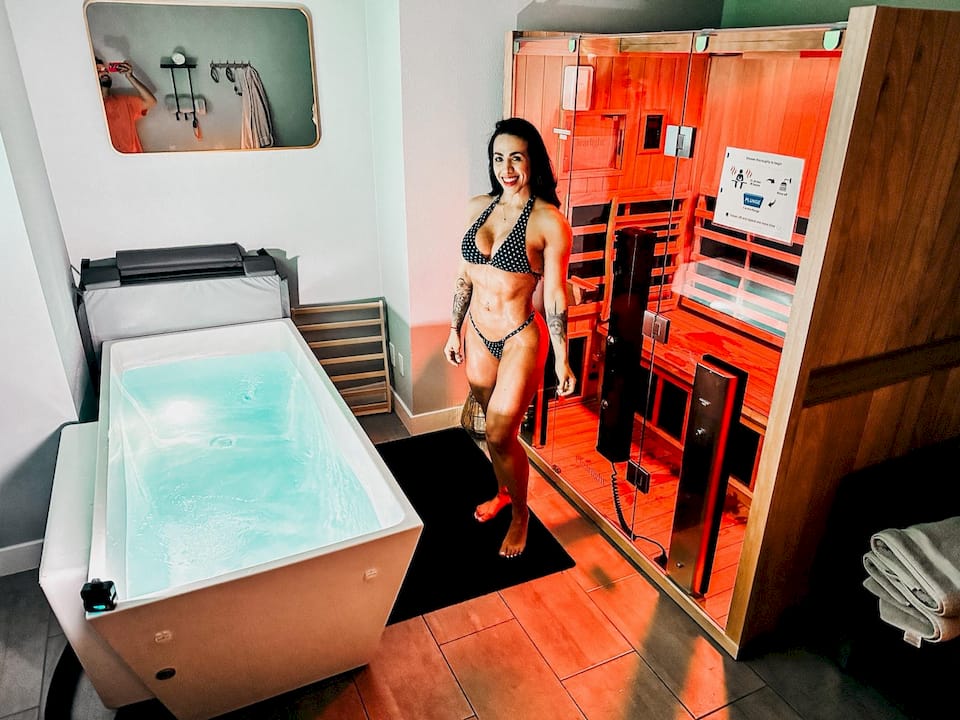
Whole-body cryotherapy involves standing in a chamber cooled to extreme temperatures for just 2 to 4 minutes. Research shows WBC reduces pro-inflammatory IL-1β while increasing anti-inflammatory IL-10, which benefits athletes dealing with systemic inflammation. However, its evidence base is thinner than CWI, and it comes with unique risks discussed in the next section. Explore your cryotherapy options to see what fits your recovery goals.
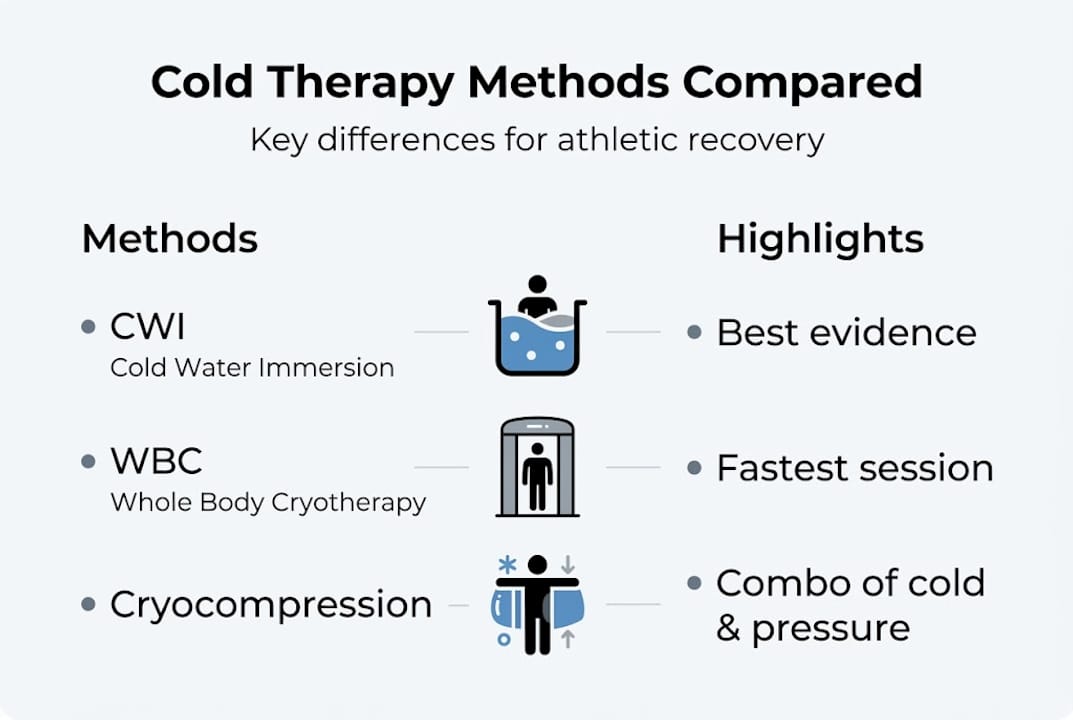
Cryocompression pairs cold with mechanical compression simultaneously. Studies show cryocompression reduces inflammation markers including IL-1β and thigh circumference, improves maximal voluntary contraction (MVC) force, and reduces muscle soreness more effectively than cold alone. It’s particularly valuable after high-impact events or when you need to bounce back fast.
Key takeaways for choosing your method:
-
Use CWI for reliable, evidence-backed DOMS relief during heavy training weeks.
-
Use WBC when you want a quick, systemic anti-inflammatory effect and have access to a professional facility.
-
Use cryocompression when peak recovery speed matters, such as between tournament rounds.
Pro Tip: Match your method to your goal. If you’re managing soreness across a training week, CWI is your most dependable tool. If you’re preparing for a competition, cryocompression may give you the edge. Check out cold plunge insights and recovery packages to find the right fit.
Risks, safety, and myths: What athletes need to know
With so many cold therapy styles available, it’s crucial to separate the facts from common misconceptions about safety and efficacy.
Let’s start with WBC. While it’s popular and widely marketed, WBC has more limited evidence compared to CWI, and it carries unique safety risks, including frostbite and asphyxiation when nitrogen gas is used in the chamber. CWI, by contrast, is safer and better supported by peer-reviewed research for muscle soreness relief.
Common myths athletes believe about cold therapy:
-
“Colder is always better.” False. Temperatures below the recommended range increase frostbite risk without adding recovery benefit.
-
“Cold therapy should be used after every workout.” Not true. Using cold after strength sessions can blunt muscle growth adaptations.
-
“WBC is more effective than a cold plunge.” The research doesn’t support this. CWI has stronger evidence for DOMS reduction.
-
“Longer exposure means more recovery.” Beyond 20 minutes, risks increase without meaningful additional benefit.
“The FDA has noted limited clinical evidence supporting WBC for medical claims. Athletes should approach it as a complementary tool, not a primary treatment.”
Practical safety guidelines for Las Vegas athletes:
-
Always work with professional supervision when using WBC or extreme cold protocols.
-
Limit CWI sessions to 10 to 20 minutes at 10 to 15°C.
-
Never use cold therapy on an open wound or acute injury without medical clearance.
-
Warm up gradually after cold exposure. Avoid jumping into intense activity immediately.
-
Stay hydrated before and after sessions, especially in Las Vegas heat.
Using safe cryotherapy practices at a reputable facility removes much of the guesswork. Trained staff can guide your session length, temperature, and frequency based on your training load and goals.
Making the most of cold therapy: Applying best practices in Las Vegas
Knowing which method to use is only half the story. The real impact comes from how you apply cold therapy in your Las Vegas athletic routine.
Here’s a step-by-step approach to integrating cold therapy into your weekly plan:
-
Identify your high-demand training days. These are the sessions where cold therapy delivers the most return.
-
Choose your method based on the session type. Endurance and sport-specific sessions pair well with CWI. Avoid cold immediately after strength or hypertrophy work.
-
Time your cold exposure within 30 minutes post-session for endurance recovery to maximize the anti-inflammatory window.
-
Pair cold therapy with quality sleep and protein intake. Recovery is systemic. Cold alone won’t compensate for poor nutrition or inadequate rest.
-
Track your results. Note soreness levels, strength retention, and sleep quality week over week.
| Recovery goal | Recommended method | Timing |
|---|---|---|
| Reduce DOMS after endurance | CWI (10 to 15°C, 10 to 20 min) | Within 30 min post-session |
| Reduce systemic inflammation | WBC (2 to 4 min) | Same day, post-competition |
| Accelerate post-event recovery | Cryocompression | Within 1 to 2 hours post-event |
| Preserve hypertrophy gains | Avoid cold immediately | Wait 4 to 6 hours or skip |
Athletes who integrate cold therapy correctly see CK reduced by 30 to 40% and strength retention rates of 94.4 percent versus 89 percent when cold is delayed or skipped. Those numbers reflect real performance differences over a competitive season.
For best results, prioritize CWI for DOMS relief over WBC, use cryocompression for enhanced effects when available, and avoid cold immediately post-strength work if hypertrophy is your goal. Pair your cold therapy sessions with supportive therapies like dry float and red light therapy to build a complete recovery system.
Pro Tip: Las Vegas heat accelerates dehydration and compounds recovery demands. Scheduling cold therapy in the evening after your hardest sessions can also support deeper, more restorative sleep.
Why most athletes underuse cold therapy—and what actually works
Here’s something most recovery guides won’t tell you: the biggest mistake athletes make isn’t skipping cold therapy. It’s using it indiscriminately after every single workout. That habit can actually work against you, particularly if strength and muscle building are your primary goals.
The athletes who get the most from cold therapy are the ones who treat it as a precision tool. They use it strategically after endurance sessions, high-volume sport practice, or competition days. They skip it after heavy lifting when muscle protein synthesis needs to run its full course. And they track their results rather than guessing.
Timing and method selection matter far more than frequency. A well-timed CWI session after a brutal training block will outperform daily cold plunges applied without purpose. We’ve seen this pattern consistently with athletes who visit our facility and start paying attention to when and why they’re using cold, not just how often.
If you want to go deeper on building a smarter recovery routine, our recovery insights cover the latest evidence-based strategies for athletes at every level.
Your next step: Advanced recovery therapies in Las Vegas
If you’re ready to upgrade your recovery, here’s what Wellness Las Vegas offers local athletes.
At Wellness Sauna & Cryotherapy, we provide Las Vegas cold plunge sessions, local cryotherapy in a professional, supervised environment, and contrast therapy protocols designed specifically for athletic recovery. Our private rooms, premium equipment, and trained staff mean you get a personalized experience built around your training schedule and performance goals. Whether you’re managing DOMS between competitions or building a long-term recovery routine, we’ll help you apply the right methods at the right time. Book your session today and start recovering smarter.
Frequently asked questions
What is the safest form of cold therapy for athletes?
CWI is widely supported by research as both safe and effective for muscle recovery, with fewer risks compared to whole-body cryotherapy, which the FDA notes has limited clinical evidence for medical claims.
How soon after training should I use cold therapy?
Use cold water immersion within 30 minutes after endurance sessions, but avoid cold immediately after strength or hypertrophy workouts to protect muscle adaptation and growth.
Does cold therapy speed up injury recovery?
Cold therapy can reduce inflammation and pain to support faster initial recovery, with vasoconstriction reducing blood flow and inflammation at the injury site, though results vary by injury type and severity.
Is whole-body cryotherapy better than cold plunges?
Cold plunges have stronger research backing for reducing post-exercise soreness, while WBC has fewer proven benefits and carries additional safety risks, particularly when nitrogen gas is used in the chamber.
How often should athletes use cold therapy?
Most athletes benefit from 2 to 4 sessions per week after demanding training days, as cold therapy integrated several times weekly supports consistent recovery without interfering with adaptation when timed correctly.